Agricultural Cooperative Weighing Scales in Kenya: The Self Help Africa Case Study
Across Kenya's agricultural cooperatives — from maize depots in the Rift Valley to coffee and tea buying centres in Central and Western Kenya — the accuracy of a single weighing scale can determine whether a smallholder farmer is paid fairly for a season's work. This case study documents how Scalestech (Scales Technology Solutions Ltd) supplied, installed, and calibrated heavy-duty price computing platform scales for agricultural cooperatives supported by Self Help Africa, and what that project reveals about the broader challenge of accurate, trustworthy weighing infrastructure for Kenya's farming communities.
About This Project
- Client: Self Help Africa
- Location: Kenya (agricultural cooperatives, multiple counties)
- Industry: Agriculture / Non-Profit / Cooperative Development
- Solution supplied: Heavy-Duty Price Computing Platform Scales
- Scope: Installation, calibration, and staff training across participating agricultural cooperatives

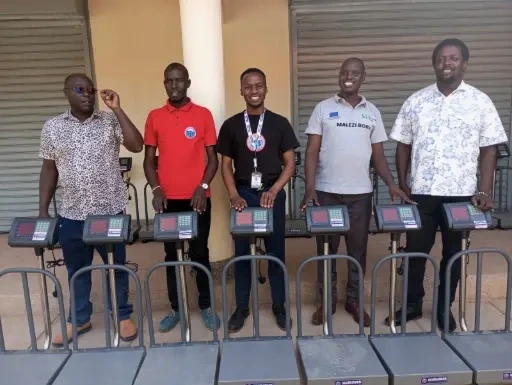
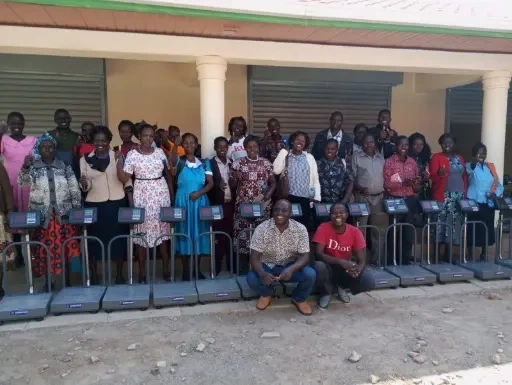
The Solution — Heavy-Duty Price Computing Platform Scales
Key Features and Specifications
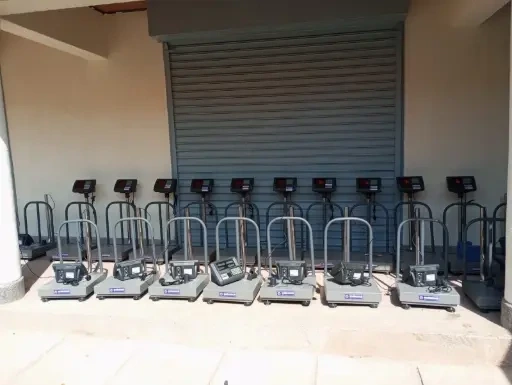
The platform scales installed for Self Help Africa's partner cooperatives were selected and configured specifically for high-volume agricultural produce weighing:
- Robust, field-grade construction — steel platform and frame designed to withstand repeated loading with sacks and crates in dusty, outdoor or semi-covered buying-centre conditions.
- High load capacity — sized to the cooperative's typical delivery volumes, so a full sack or multiple sacks can be weighed in a single pass without exceeding capacity or slowing the queue.
- Automatic price-computing functionality — the scale calculates total payment due based on live weight and a preset rate per kilogram, removing manual arithmetic (and manual-arithmetic errors) from the transaction.
- Clear, dual-visibility digital display — weight and computed price are shown in a format both the cooperative clerk and the farmer can read directly, which is what makes the transaction transparent rather than something the farmer has to simply trust.
- Legal-metrology-ready calibration — set up and verified in line with Kenya's Weights and Measures requirements, so the readings the cooperative uses to pay farmers are defensible and consistent.

Why Accurate Weighing Matters for Kenya's Agricultural Cooperatives
The Cost of Inaccurate Weighing to Smallholder Farmers
For a smallholder farmer delivering maize, beans, or coffee cherry to a cooperative buying point, the scale is the single instrument that converts a season of labour into income. A scale that under-reads by even a small margin — whether through wear, poor calibration, or deliberate tampering — has an outsized effect on household income when it happens delivery after delivery, across an entire harvest season. This is precisely the failure mode that price-computing, KEBS-compliant platform scales are designed to close: they remove ambiguity from the transaction by displaying weight and computed price simultaneously, in full view of both the farmer and the cooperative clerk.
This matters more in a cooperative setting than in almost any other commercial context, because the transaction is rarely a one-off. A farmer delivering to the same cooperative buying centre, week after week through a harvest season, needs to trust the scale to keep coming back — and a cooperative's own reputation with its membership depends on that trust being earned and maintained.
Agriculture's Role in Kenya's Economy
Agriculture remains the single most important sector of Kenya's economy. Depending on the measure used, agriculture contributes somewhere between roughly a fifth and a third of Kenya's GDP and employs the majority of the country's rural population, according to Kenya National Bureau of Statistics and World Bank data. Millions of Kenyan households depend directly or indirectly on smallholder farming and the cooperative structures that aggregate, weigh, and sell their produce — from tea factories in Kericho and Murang'a, to coffee cooperative societies in Nyeri and Kiambu, to grain depots across the Rift Valley grain belt around Nakuru, Eldoret, and Kitale. Reliable weighing infrastructure is not a peripheral concern for this sector; it is core operational infrastructure, as essential to a cooperative's function as its storage sheds or its transport arrangements.
The Challenge: Weighing at Cooperative Scale
Before this project, the cooperatives supported by Self Help Africa faced a familiar set of constraints common to agricultural buying points across Kenya: weighing equipment that was either too light-duty for sustained daily volumes, lacked price-computing functionality (forcing manual price calculation and the errors that come with it), or had drifted out of calibration without a clear maintenance pathway. None of these are unusual problems — they are, in fact, the norm at cooperative level across East Africa, where weighing equipment is often bought once and used for years without a service relationship behind it.
Scalestech's task was to replace this gap with equipment that could handle sustained commercial-agricultural volumes — sacks of maize, crates of produce, bags of coffee cherry — while computing price automatically and remaining accurate under continuous field use.
Why Price-Computing Functionality Matters for Cooperatives
A standard platform scale tells you a weight. A price-computing platform scale tells a farmer, in the same instant, what they are owed. For a cooperative processing dozens or hundreds of deliveries during a harvest peak, this single feature removes an entire category of dispute, delay, and human error from the buying process — clerks are no longer doing mental or paper-based rate calculations under time pressure, and farmers aren't left waiting for a second person to confirm a manually calculated total.
Implementation Process
Site Assessment and Planning
Scalestech began with on-the-ground assessments of each participating cooperative's operations — reviewing typical delivery volumes, existing weighing infrastructure (if any), buying-point layout, and power availability — to determine the correct scale specification and physical placement for each site. This step matters more in a cooperative context than a retail one: a scale placed awkwardly relative to the delivery queue, storage point, or payment desk creates a bottleneck no matter how accurate the instrument itself is.
Installation
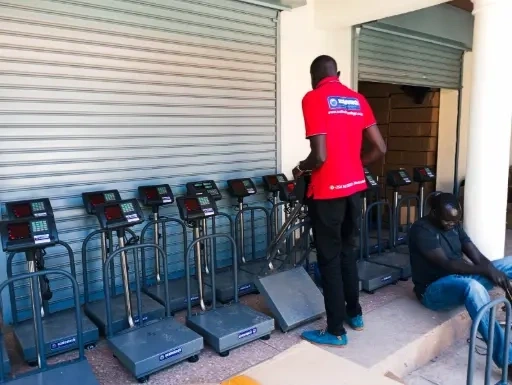
Platform scales were installed at strategic points within each cooperative's buying and collection area, positioned to keep the farmer-delivery-to-payment workflow as short and legible as possible. Installation included the physical siting of the scale, connection of any associated display or printing peripherals, and a walk-through of the buying-point layout with cooperative management.
Calibration and Testing
Each scale was calibrated and tested on-site before handover, confirming accuracy across the working weight range the cooperative would actually use — not just at a single reference point. This is a step that is frequently skipped or rushed by lower-cost suppliers, and it is the single biggest determinant of whether a scale stays accurate months later rather than drifting after the first few weeks of heavy use.
Staff Training and Handover
Cooperative staff were trained on day-to-day operation, basic troubleshooting, and the maintenance steps needed to keep the scale within calibration between service visits. Training was deliberately kept practical and hands-on, reflecting the reality that cooperative clerks are agricultural staff first, not equipment technicians — the scale had to be simple enough to operate confidently from day one.
Beyond This Project: Agricultural Weighing Across Kenya and East Africa
Serving Kenya's Agricultural Counties
The challenges this project addressed are not unique to the cooperatives Self Help Africa supports — they are common across Kenya's major agricultural regions. Scalestech supplies and installs agricultural weighing equipment across Nairobi, Nakuru and the wider Rift Valley grain belt, Eldoret, Kisumu and the Lake Basin, Thika and the surrounding coffee- and horticulture-growing areas of Central Kenya, and Mombasa for coastal and export-linked agricultural logistics. In each of these regions, the same underlying need recurs: accurate, durable, price-computing weighing equipment that can be trusted by both the buyer and the smallholder farmer delivering produce.
Regional Reach — Uganda, Tanzania, Rwanda, Zambia, Sudan
The same class of solution — heavy-duty, price-computing platform scales suited to cooperative and agri-buying-point use — is equally relevant across East Africa's wider agricultural economies. Scalestech supplies and supports clients in Kampala (Uganda), Dar es Salaam and Arusha (Tanzania), Kigali (Rwanda), Lusaka (Zambia), and Khartoum (Sudan), where cooperative and cash-crop buying structures face the same weighing-accuracy and fair-trade challenges documented in this case study.
Why Cooperatives and NGOs Choose Scalestech
Certification and Compliance
Scalestech's weighing equipment is supplied and calibrated to comply with Weights and Measures Kenya (KEBS) legal metrology requirements, and the company holds KENAS ISO/IEC 17025:2017 accreditation for its calibration services — a distinction that matters directly to cooperatives and NGOs, since it means the readings used to pay farmers are backed by a nationally recognised calibration standard, not just a manufacturer's factory setting.
After-Sales Support and Calibration Services
Unlike a one-off equipment purchase, Scalestech's agricultural weighing installations are backed by ongoing calibration and after-sales service — the same service relationship that keeps a scale accurate for years rather than months. For cooperatives and NGO-funded programmes planning multi-year agricultural development work, that service continuity is often as important as the initial hardware specification.