
In heavy industries such as logistics, mining, cement, construction, agriculture, manufacturing, and bulk material handling, weighbridges are among the most critical control points in daily operations. Every truck entering or leaving a facility represents value. Whether the cargo is cement, sand, grain, steel, fuel, fertilizer, tea, or industrial raw materials, the recorded weight determines how much a company buys, sells, invoices, stores, and transports.
Because of this, weighbridges directly influence revenue, inventory accuracy, operational efficiency, and legal compliance.
However, when weighbridge operations rely heavily on manual processes, such as paper tickets, handwritten records, and operator-controlled data entry, the weighbridge becomes vulnerable to fraud, manipulation, and human error. These weaknesses can lead to serious financial losses, customer disputes, inaccurate stock reports, and failure to meet regulatory compliance requirements.
This article explores 10 major ways industrial weighbridges are manipulated, why they happen, and how modern weighbridge automation eliminates these risks.
Why Manual Weighbridge Operations Are a Major Risk
Manual weighbridge systems are common in many facilities, especially where operations have not yet adopted automation. In a typical manual setup:
The operator records vehicle details manually.
The truck is weighed.
The operator prints a paper ticket.
The ticket is used as proof of dispatch or delivery.
Data may later be entered into the ERP system, Excel, or accounting system.
This process creates multiple weak points because the system depends on human honesty and accuracy. It also creates opportunities where records can be altered, duplicated, delayed, or manipulated without immediate detection.
In industries where thousands of tonnes move every month, even small weight manipulations accumulate into significant losses.
10 Ways Industrial Weighbridges Are Manipulated
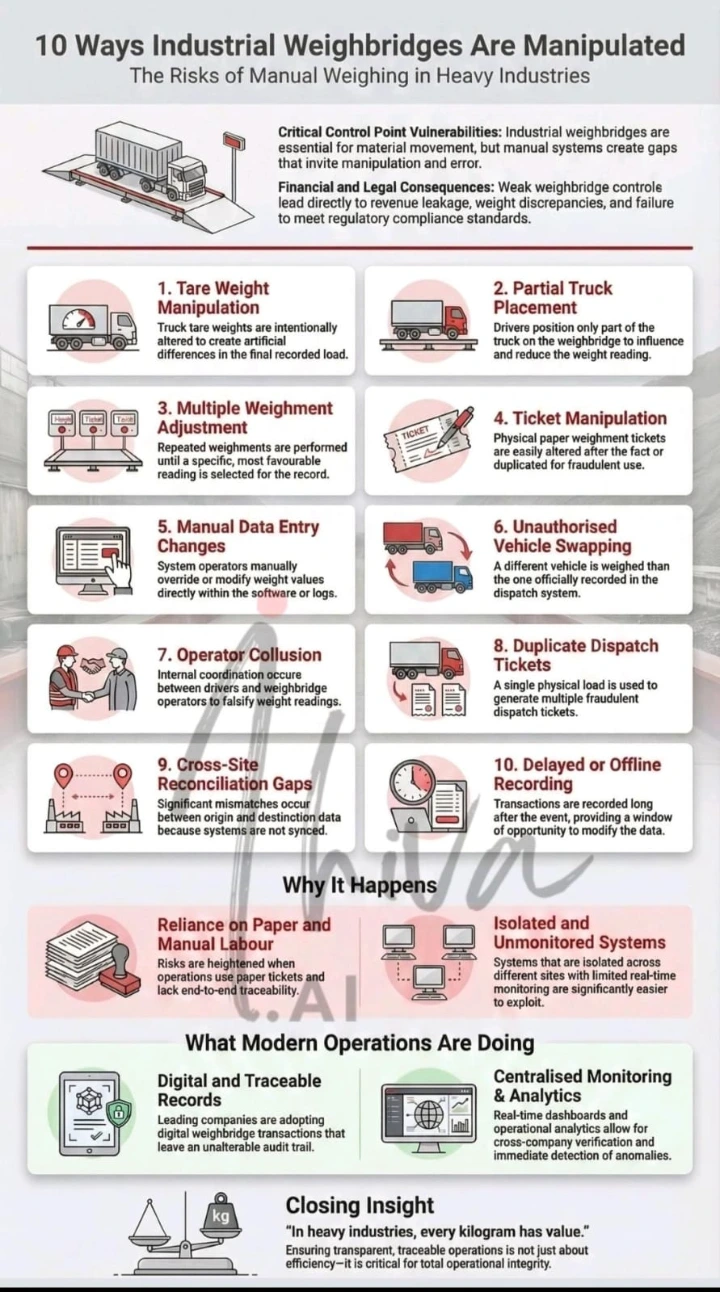
1. Tare Weight Manipulation
Tare weight manipulation occurs when the weight of the empty truck (tare) is intentionally altered to create a false net weight.
For example, if a truck is meant to deliver 20,000 kg of goods, the net weight is calculated as:
Gross Weight – Tare Weight = Net Weight
If the tare weight is manipulated, the final net weight becomes inaccurate.
How It Happens
This manipulation is common in manual environments where:
The operator enters the tare weight manually.
The system allows editing of stored tare values.
Trucks are not verified using a secure tare database.
A driver may use a different tare ticket from another truck or a previous record to reduce or inflate the net weight.
Impact on Business
Tare manipulation causes:
Overpayment for raw materials
Undercharging customers
Stock losses
Unfair trade practices
Accounting discrepancies
This is one of the most common sources of revenue leakage because it is difficult to detect without proper automation and audit trails.
2. Partial Truck Placement on the Weighbridge
Partial truck placement is when the driver positions only part of the truck on the weighbridge platform. This can result in inaccurate readings.
How It Happens
The driver may:
Leave some axles off the platform
Stop before fully mounting the deck
Position the truck in a way that reduces load distribution
In a manual system, the operator may not notice, or may intentionally allow it.
Impact on Business
Partial placement can lead to:
Lower recorded weight than actual
Incorrect dispatch or receiving data
Disputes between the supplier and the buyer
Reduced accountability
This manipulation is especially common where there is no automated traffic control, sensors, or camera verification.
3. Multiple Weighment Adjustment (Weighing Until a Favorable Reading Appears)
Multiple weighment adjustment happens when a truck is weighed several times, and only the most “favorable” weight is recorded.
How It Happens
In manual weighbridge environments, the operator may allow repeated weighing because:
There is no strict control on the number of weighments
The system does not record each weighment attempt
The final printed ticket is the only official record
A truck may drive off and return several times, or the operator may reset the system until the weight reading matches a desired figure.
Impact on Business
This leads to:
Unreliable transaction history
Manipulated dispatch figures
Loss of inventory control
Inaccurate production reporting
Over time, it damages trust in the weighbridge process and creates inconsistencies between dispatch, stores, and accounts.
4. Ticket Manipulation and Paper Ticket Fraud
Paper weighbridge tickets are easy to alter, forge, duplicate, or misuse.
How It Happens
Fraudsters can:
Edit printed tickets using simple tools
Change handwritten details like date, product, or vehicle number
Print duplicate tickets and use them multiple times
Present old tickets as new dispatch documents
Because paper tickets have no digital verification, the company cannot easily confirm whether a ticket is genuine or altered.
Impact on Business
Ticket fraud results in:
False dispatch records
Theft of goods
Payment disputes
Fake deliveries or collections
Loss of credibility with customers
Paper-based systems make auditing difficult because physical tickets can be lost, damaged, or replaced.
5. Manual Data Entry Changes and Record Editing
Manual data entry changes occur when operators modify weight values, product names, customer details, or vehicle information in the weighbridge system.
How It Happens
In some setups:
Operators have full system access
Weighbridge software allows editing after weighing
There is no login accountability
There is no audit trail showing who changed what
This allows weight figures to be altered without detection.
Impact on Business
Manual record editing can cause:
Incorrect invoicing
Fraudulent deliveries
Stock inconsistencies
Disputes between the dispatch and finance departments
Compliance risks
Even when not done intentionally, human error during data entry can cause expensive mistakes.
6. Unauthorized Vehicle Swapping
Vehicle swapping occurs when a different truck is weighed than the one officially recorded in the dispatch system.
How It Happens
A driver may:
Bring a truck with a different registration number
Swap the trailer after weighing
Use another vehicle to receive goods under the same ticket
In manual systems, this can happen easily because there may be no automated verification of vehicle identity.
Impact on Business
Vehicle swapping leads to:
Goods are being delivered to the wrong party
Dispatch records not matching actual deliveries
Increased theft opportunities
Reduced traceability in logistics operations
For industries like fuel, grain, and cement, this becomes a major risk.
7. Operator Collusion
Operator collusion happens when weighbridge staff collaborate with drivers, suppliers, or customers to manipulate weighbridge transactions.
How It Happens
This can include:
Allowing partial placement intentionally
Editing weight records
Printing extra tickets
Recording false tare weights
Ignoring procedural checks
Since the operator controls the weighing point, collusion becomes one of the most dangerous risks in manual weighbridge environments.
Impact on Business
Collusion results in:
Systematic fraud
Long-term revenue leakage
Difficulty tracing accountability
Loss of trust in internal operations
It can also create legal liability for the company if fraudulent practices affect taxation or regulatory compliance.
8. Duplicate Dispatch Tickets
Duplicate dispatch ticket fraud happens when a single physical load is used to generate multiple tickets.
How It Happens
A truck may be weighed once, but the operator prints:
Two tickets
Multiple copies
Duplicate records under different references
These tickets can then be used to claim additional dispatches that never occurred.
Impact on Business
Duplicate tickets cause:
False stock movement records
Overstated dispatch volumes
Fake supplier payments
Fraudulent customer billing
This is especially harmful in organizations where dispatch documentation is used for inventory reconciliation and financial reporting.
9. Cross-Site Reconciliation Gaps
Many companies operate multiple sites, such as:
Factory weighbridge
Warehouse weighbridge
Distribution depot weighbridge
Customer delivery weighbridge
When these sites operate independently without synchronized data, discrepancies occur.
How It Happens
A truck may be weighed at dispatch and again at delivery, but if the systems are not connected:
Records may not match
Differences may not be investigated
Fraud can be hidden between sites
Impact on Business
Cross-site gaps result in:
Difficult reconciliation
Unexplained stock shrinkage
Disputes with customers and suppliers
Poor transparency in logistics performance
Without centralized reporting, management cannot easily detect patterns or suspicious transactions.
10. Delayed or Offline Recording
Delayed recording occurs when weighbridge transactions are entered into the system long after the weighing process is completed.
How It Happens
This is common where:
Transactions are written on paper first
Data is entered later into Excel or ERP
The system operates offline
Operators can backdate or edit transactions
The longer the delay, the greater the opportunity for manipulation.
Impact on Business
Delayed recording causes:
Weak audit trails
Opportunities to modify data after dispatch
Poor accountability
Increased disputes in invoicing and delivery confirmation
It also affects decision-making because management receives outdated information.
The Financial and Legal Consequences of Weak Weighbridge Control
When weighbridge manipulation is not controlled, companies face serious consequences such as:
Revenue losses due to under-recorded weights
Overpayment to suppliers due to inflated weights
Stock losses and inventory shrinkage
Inaccurate customer invoicing
Poor reporting and weak accountability
Operational inefficiencies and slow truck turnaround
Legal risks and non-compliance with regulatory standards
In industries where compliance and accurate reporting are required, weak weighbridge control can result in penalties and reputational damage.
Why These Manipulations Occur
The main reasons why weighbridge fraud happens include:
Reliance on Manual Labour and Paper Tickets
Manual operations create loopholes because paper tickets can be changed, misplaced, or duplicated.
Lack of Real-Time Monitoring
When management cannot monitor weighbridge transactions in real time, fraud can occur unnoticed for weeks or months.
Isolated Weighbridge Systems
A weighbridge operating independently from ERP, accounting, and inventory systems becomes an easy target for manipulation.
Lack of Audit Trails and User Accountability
If the system does not record who performed a transaction or who edited data, accountability becomes impossible.
What Modern Operations Are Doing to Prevent Weighbridge Fraud
Forward-thinking companies are now investing in automation and digital weighbridge management solutions to secure operations.
Digital and Traceable Records
Modern weighbridge systems create digital records that cannot be easily modified without leaving an audit trail. Every transaction is time-stamped and linked to a specific user and vehicle.
Centralized Monitoring and Analytics
With centralized monitoring, management can:
View weighbridge activity remotely
Detect suspicious weight patterns
Compare transactions across sites
Generate reports instantly
This makes fraud difficult and increases transparency.
Scalestech Weighbridge Automation: A Tamperproof Solution
At Scalestech Ltd, we provide advanced Weighbridge Automation Systems designed to eliminate manual loopholes and make weighbridge operations fully secure.
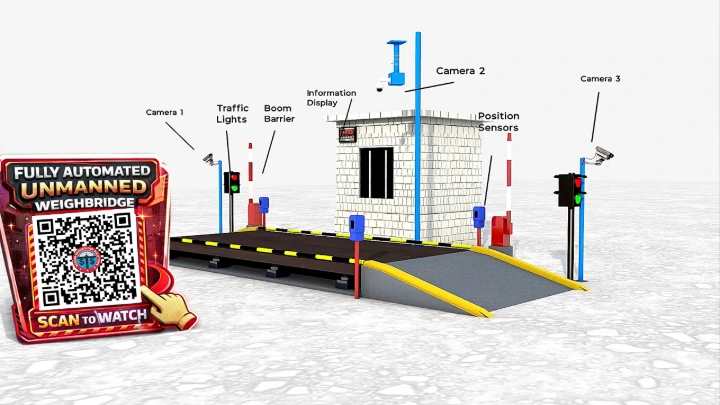
Our weighbridge automation solution ensures that the weighing process is tamperproof, accurate, traceable, and integrated into your company’s workflow.
Instead of depending on manual operator input, the system automates the entire weighing cycle from vehicle entry to final ticket generation.
How Scalestech Automation Makes the Weighbridge Tamperproof
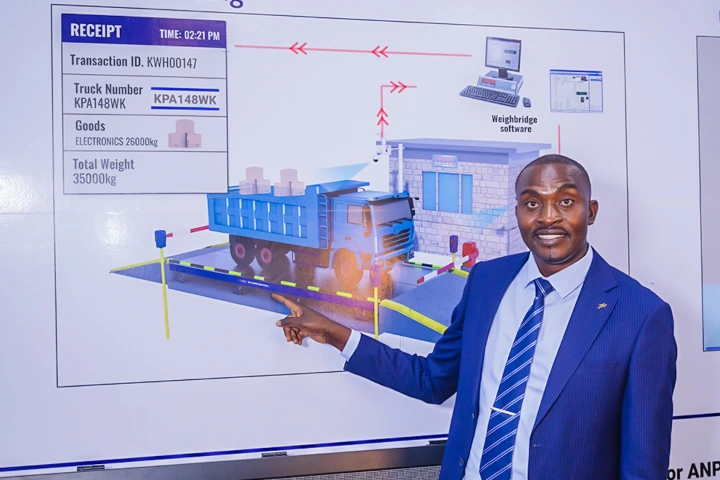
1. Fully Automated Weighing Process
The system ensures trucks are weighed automatically without reliance on operator discretion. This prevents repeated adjustments to weighing and manual interference.
2. Secure Digital Ticketing
Tickets are generated digitally with unique references, preventing duplication and forgery. Each ticket can be verified within the system.
3. ERP Integration for Real-Time Data Synchronization
Scalestech automation integrates the weighbridge with your ERP system, ensuring that every transaction is recorded instantly.
This eliminates delayed entry and reduces reconciliation errors between dispatch, accounts, and stores.
4. Controlled User Access and Audit Trails
Only authorized personnel can access the system. Every action is recorded, including:
Who performed the weighing
Who approved the transaction
time of weighing
Any edits made
This ensures full accountability.
5. Centralized Monitoring and Reporting
Management can monitor weighbridge transactions in real time, generate reports, and detect irregular patterns early.
6. Customization Based on Your Operations
Every industry has unique processes. Scalestech automation is customized to match your workflow, whether you handle:
Inbound raw material receiving
Outbound finished product dispatch
Multi-site logistics
Customer-based dispatch and invoicing
This ensures smooth integration and improved operational efficiency.
Benefits of Scalestech Weighbridge Automation
By implementing Scalestech weighbridge automation, your business gains:
Reduced fraud and revenue leakage
Improved weighing accuracy and reliability
Faster truck turnaround time
Improved stock and inventory control
Reliable dispatch documentation
Seamless ERP and accounting integration
Enhanced audit and compliance readiness
Reduced reliance on paper and manual processes
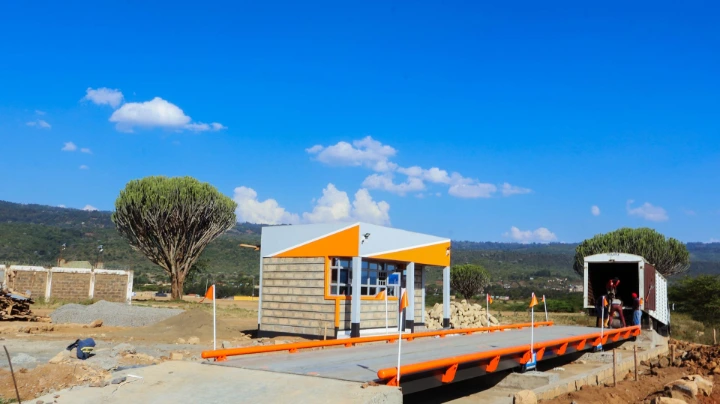
Every Kilogram Matters
In heavy industries, every kilogram has value. Manual weighbridge operations expose businesses to fraud, manipulation, and human error, leading to significant financial and operational losses.
By upgrading to a fully automated weighbridge system, companies can secure their weighing operations, improve efficiency, and strengthen accountability.
Scalestech Weighbridge Automation provides a complete tamperproof solution by automating the weighing process, digitizing records, and integrating the weighbridge with ERP systems for full transparency.
If your company is ready to eliminate weighbridge fraud and improve operational integrity, Scalestech is the partner you can rely on.