Tank Weighing Telemetry System Kenya: How Scalestech Solved Carbacid's CO2 Tank Monitoring Challenge
Client Overview — Carbacid (CO2) Limited
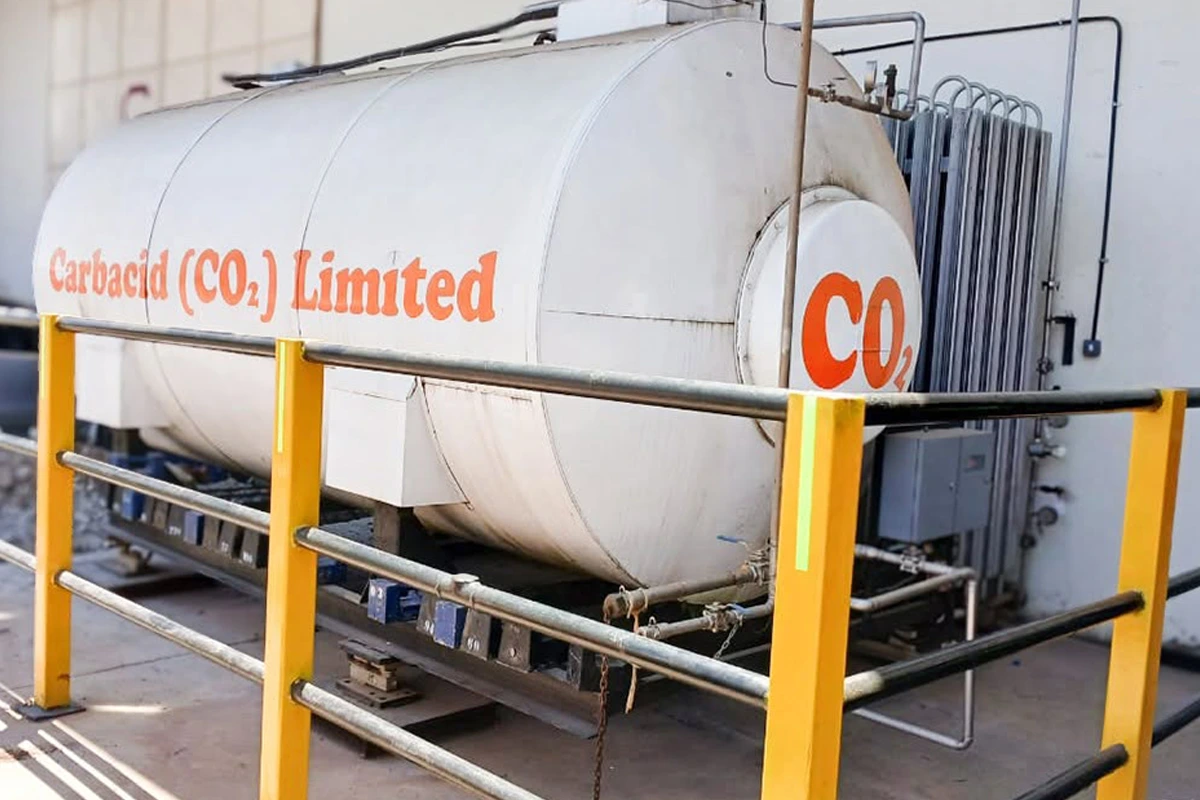
Carbacid (CO2) Limited is East Africa's largest producer of natural, food-grade liquid carbon dioxide, holding an estimated 65%+ share of the regional CO2 market. Its parent, Carbacid Investments Plc, has been listed on the Nairobi Securities Exchange since the 1970s and traces its industrial roots back to 1961. From its Nairobi base, Carbacid extracts CO2 from natural underground reservoirs, purifies it to 99.99% food-grade purity, and supplies breweries, soft-drink bottlers, and industrial customers across Kenya, Uganda, Tanzania, Rwanda, Burundi, Zambia, South Sudan, and beyond — the exact geography this audit targets.
That scale is precisely what made manual tank monitoring untenable. A company supplying bulk liquid and compressed CO2 to customers across half a dozen countries cannot afford to run out of product at a client's premises, nor can it afford to send technicians on unnecessary "just checking" site visits. Carbacid needed to know, in real time, how much CO2 sat in every monitored storage tank — without a person physically present.
The Challenge: Manual CO2 Tank Monitoring Across Multiple Sites
Before working with Scalestech, Carbacid's tank-level tracking relied on manual readings and estimation. For a business distributing bulk gas across Nairobi, Mombasa, and neighbouring East African markets, that approach created three compounding problems:
- No real-time visibility. Stock levels were only as current as the last manual check, which meant a tank could run critically low between visits with no automatic warning.
- Unpredictable refill scheduling. Without consumption trend data, Carbacid's logistics team had to plan deliveries on estimates rather than data, increasing the risk of either late refills (stockouts, halted customer production lines) or wasted trips to tanks that weren't yet due for a top-up.
- No centralized oversight across sites. Each tank was effectively monitored in isolation. There was no single dashboard showing the status of every connected tank, which made multi-site, multi-country oversight — exactly the kind of operation Carbacid runs across East Africa — difficult to manage from a single office.
Why Manual Tank Checks Fail at Industrial Scale
Manual dipping, weighing, or visual estimation of a bulk CO2 tank is inherently a point-in-time snapshot. It tells you the level at that moment, not the rate of consumption, not whether the tank is behaving normally, and not whether a fault (a stuck valve, a leak, a battery about to fail on any connected equipment) is developing. At the scale Carbacid operates — supplying breweries and bottling plants where a CO2 shortage can stop a production line — a snapshot every few days is not sufficient risk management.
The Business Cost of Stockouts and Delayed Refills
For a beverage or brewery client depending on a steady CO2 supply, a stockout is not a minor inconvenience — it can halt carbonation lines and production schedules entirely. For Carbacid as the supplier, an unplanned emergency delivery costs more in logistics than a scheduled one, and repeated stockouts damage the customer relationship that underpins Carbacid's 65% regional market share. Remote, real-time monitoring turns an unpredictable reactive process into a scheduled, data-driven one.
The Solution: A Cloud-Connected Tank Weighing Telemetry System
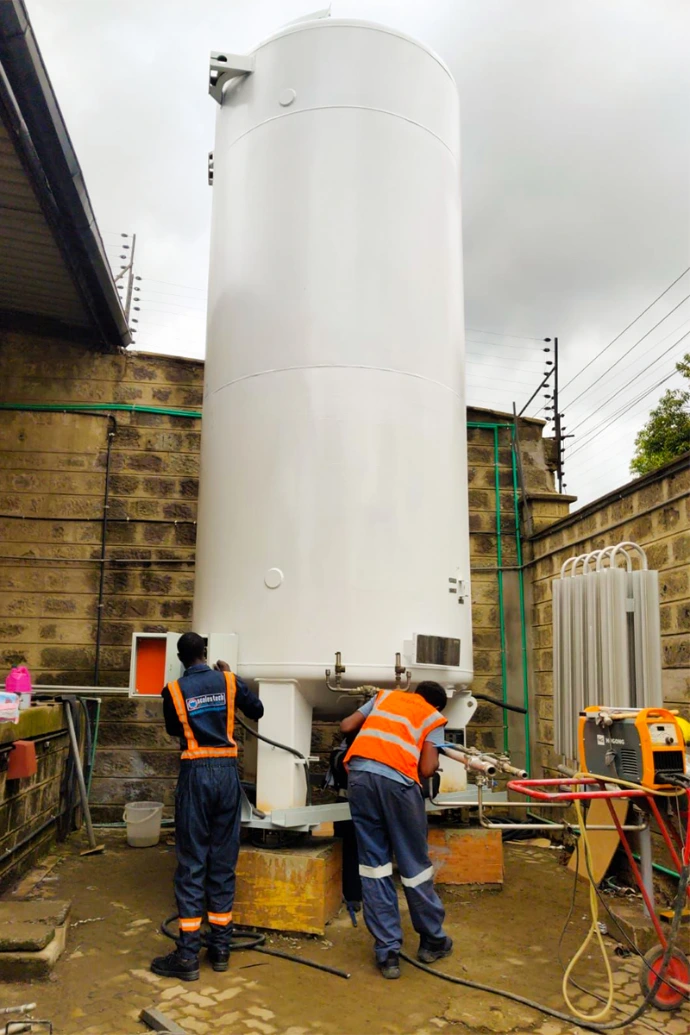
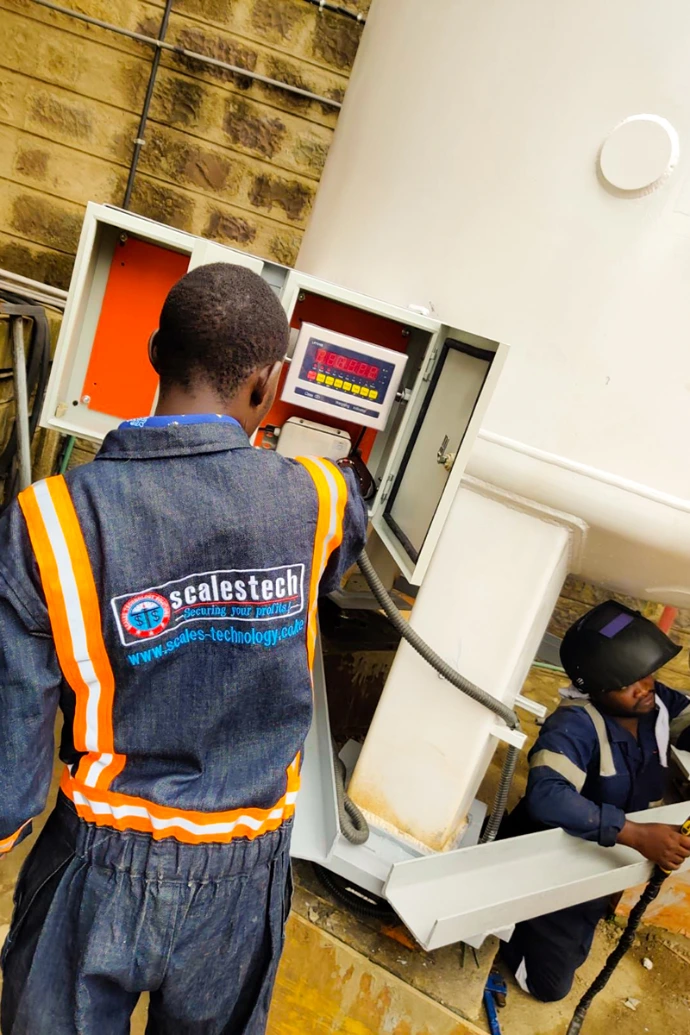
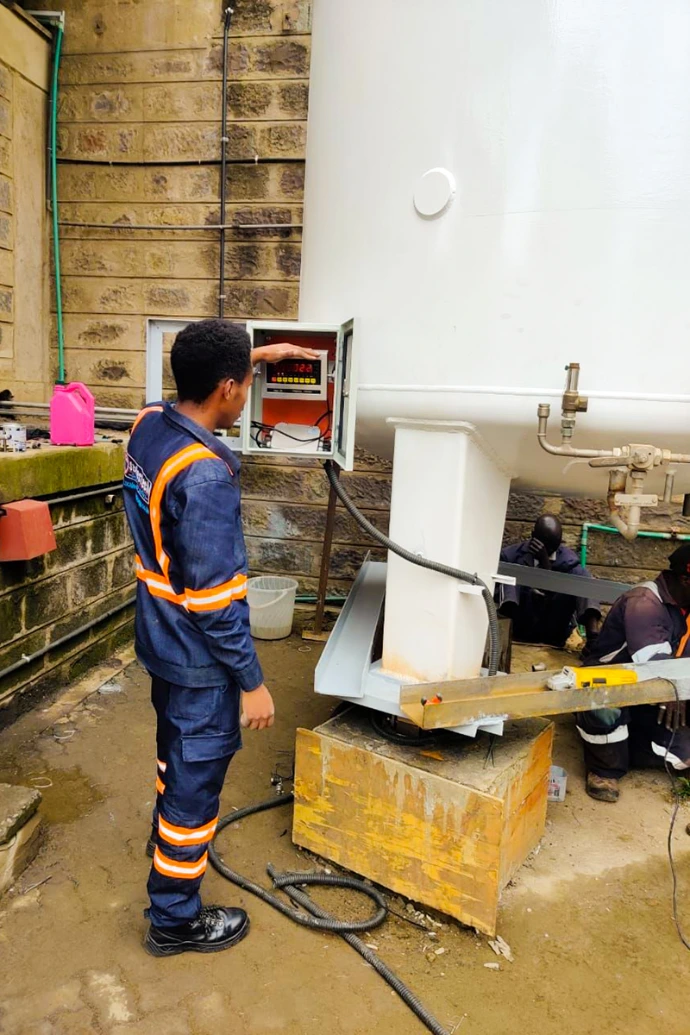
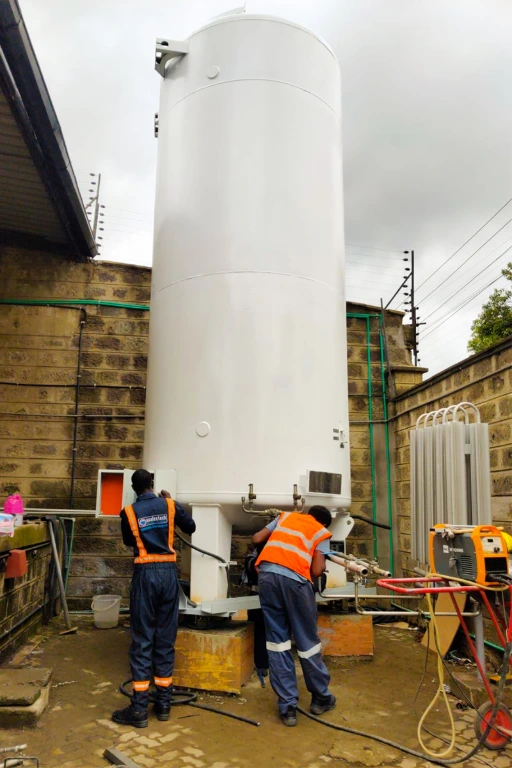
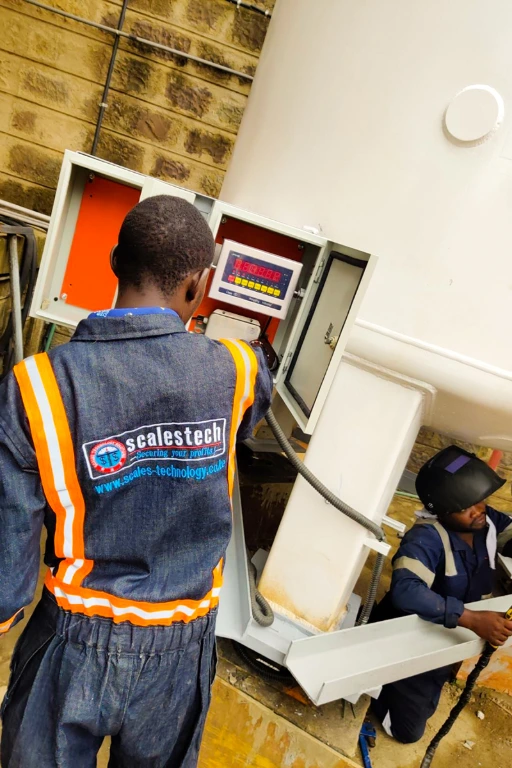
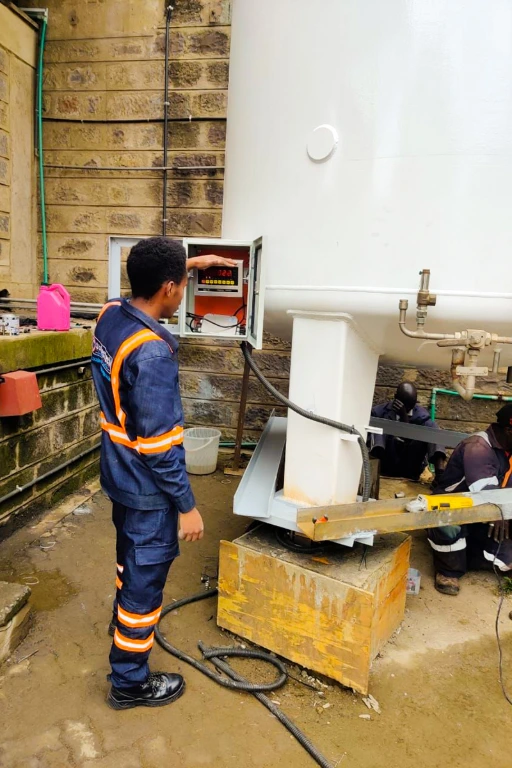
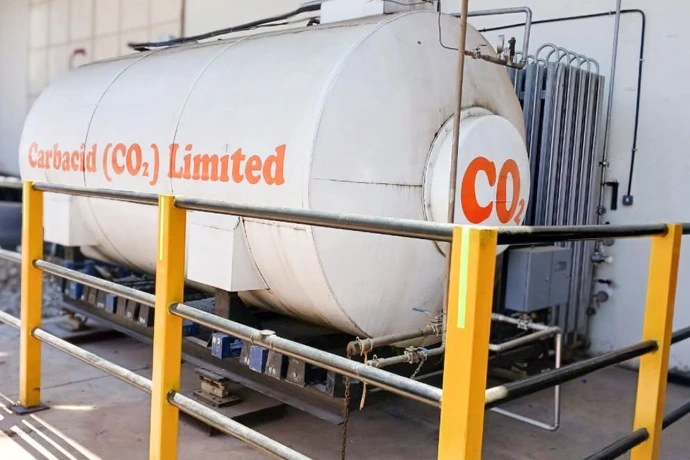
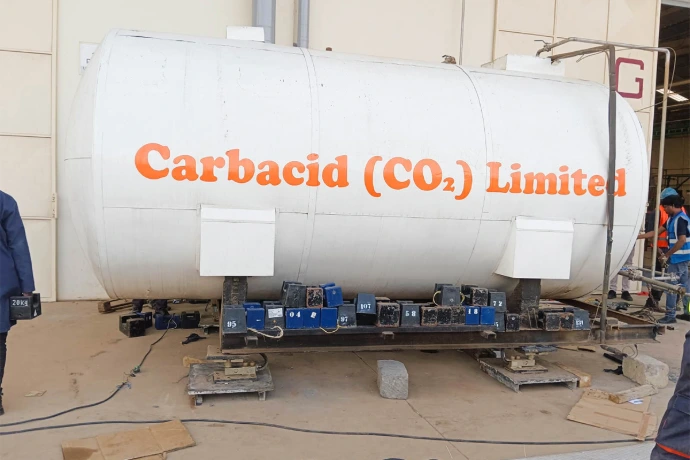
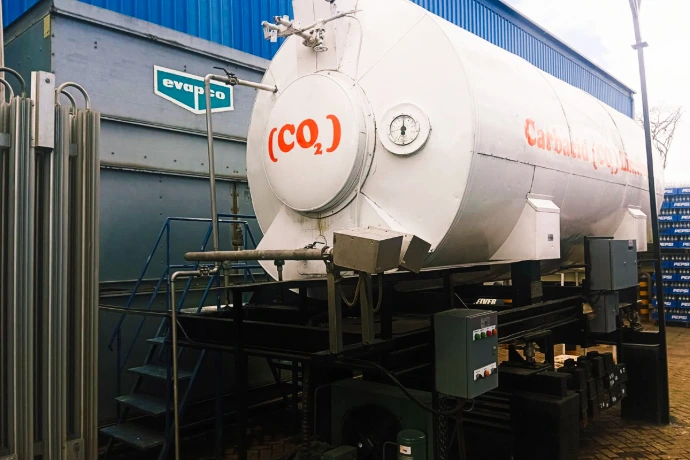
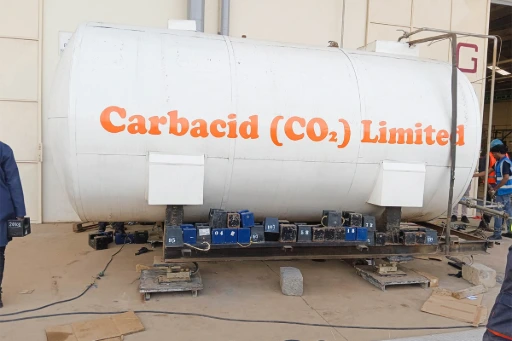
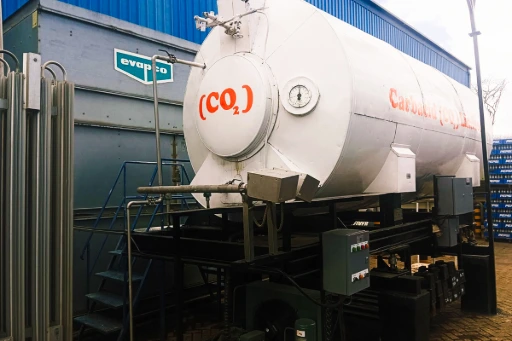
Scalestech deployed its Tank Weighing Telemetry Device, integrated with the LP7510 weighing indicator and a secure cloud-based monitoring platform, across Carbacid's monitored CO2 storage tanks. Unlike level-based sensors (ultrasonic or float sensors that estimate volume), Scalestech's system measures actual weight using load cells — a method that stays accurate regardless of tank shape, foaming, or the physical state of the contents, which matters for a product like liquid CO2 stored under pressure.
How the Tank Weighing Telemetry Device Works
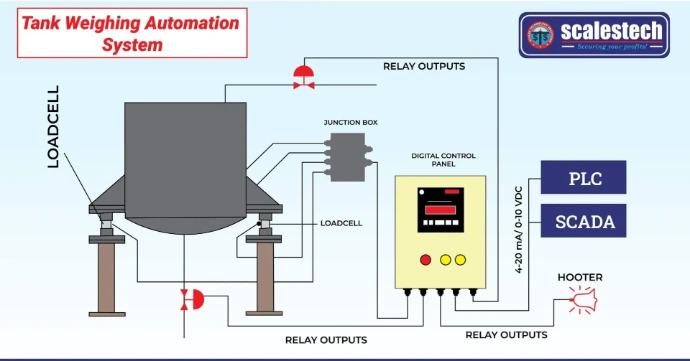
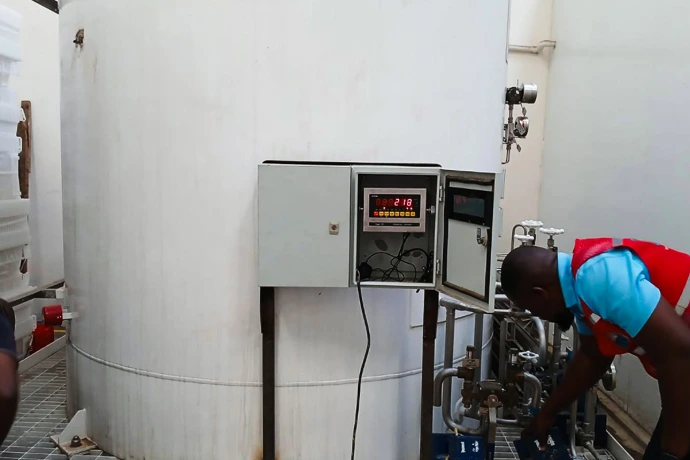
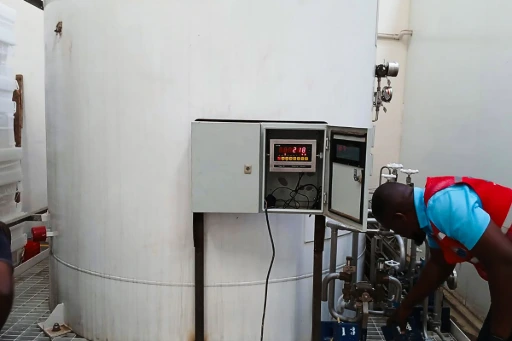
Load cells mounted on the tank's support structure continuously measure the combined weight of the tank and its contents. The LP7510 weighing indicator processes that raw signal into a live weight reading, alongside ambient temperature and the device's own battery voltage. That data is transmitted over a GPRS-enabled connection to Scalestech's cloud servers, where it becomes visible on a web dashboard and triggers automated SMS alerts when values cross pre-set thresholds.
Integration with the LP7510 Weighing Indicator
The LP7510 is the field-hardened component that bridges the physical load cell signal and the digital telemetry layer. It's built for continuous industrial operation rather than intermittent readings, which is what allows the system to report Active Weight, Temperature, and Battery Voltage on a rolling basis rather than only when someone requests a reading.
GPRS Connectivity for Remote Kenyan and East African Sites
A meaningful design decision for the East African context: the system uses GPRS rather than requiring fixed broadband or Wi-Fi. Industrial and agricultural sites across Kenya — and across Carbacid's wider East African footprint in Uganda, Tanzania, Rwanda, and beyond — often sit outside reliable fibre or fixed-line coverage but within mobile network range. GPRS-based telemetry means a tank at a bottling plant outside Nairobi, or a depot near Mombasa, Kisumu, or a cross-border distribution point, can report data as reliably as one in a city-centre warehouse.
Key Features of the Tank Weighing Telemetry System
Real-Time Data Monitoring
Weight, temperature, and battery voltage are tracked continuously rather than on a fixed check-in schedule, so any deviation shows up on the dashboard as it happens rather than at the next manual inspection.
Cloud Integration and Data Security
All tank data transmits to a centralized, encrypted cloud platform. This does two things for an operation the size of Carbacid's: it gives head office in Nairobi visibility into tanks across multiple sites and countries from one login, and it protects operational data — which for a company supplying a regulated food-grade product carries real commercial sensitivity — against unauthorized access.
Automated SMS and Email Alerts
When weight, temperature, or battery level crosses a configured threshold, the system fires an SMS notification to the responsible team automatically. This is the feature that most directly targets the original problem: it replaces "someone needs to remember to check" with "the system tells you the moment it matters."
Battery Health and Energy Efficiency
Because the monitoring hardware itself needs to run unattended for long stretches — sometimes at remote sites — the device is engineered for low power draw, and the dashboard proactively flags falling battery voltage so a technician can replace it before the device goes dark, rather than discovering a monitoring gap after the fact.
Multi-Tank, Multi-Site Scalability
The system is built to expand from a single pilot tank to dozens of tanks across multiple locations without redesigning the monitoring approach — directly relevant for a distributor like Carbacid operating storage and dispensing points across several East African countries.
Technical Specifications
| Specification | Detail |
|---|---|
| Connectivity | GPRS-enabled, for real-time data transmission from remote or urban sites |
| Weighing indicator | LP7510 (direct integration) |
| Power consumption | Optimized low-power design for long-term unattended operation |
| Monitored parameters (v1) | Active Weight, Temperature, Battery Voltage |
| Data export | Excel and CSV |
| Alerting | Bulk SMS, threshold-based |
| Access model | Multi-user, role-based device assignment |
Monitored Parameters (Version 1)
- Active Weight — live readings for accurate stock-level tracking.
- Temperature — flags ambient conditions that could affect stored product or equipment performance.
- Battery Voltage — early warning for device power issues before they cause a monitoring blackout.
Network and Power Requirements
The device requires GPRS network coverage at the installation site (available across virtually all urban and most peri-urban locations in Kenya and neighbouring East African markets) and runs on a low-power design intended to minimize both battery replacement frequency and the operational overhead of maintaining the monitoring hardware itself.
Inside the Dashboard: Cloud & Monitoring Features
Connected Devices Monitoring
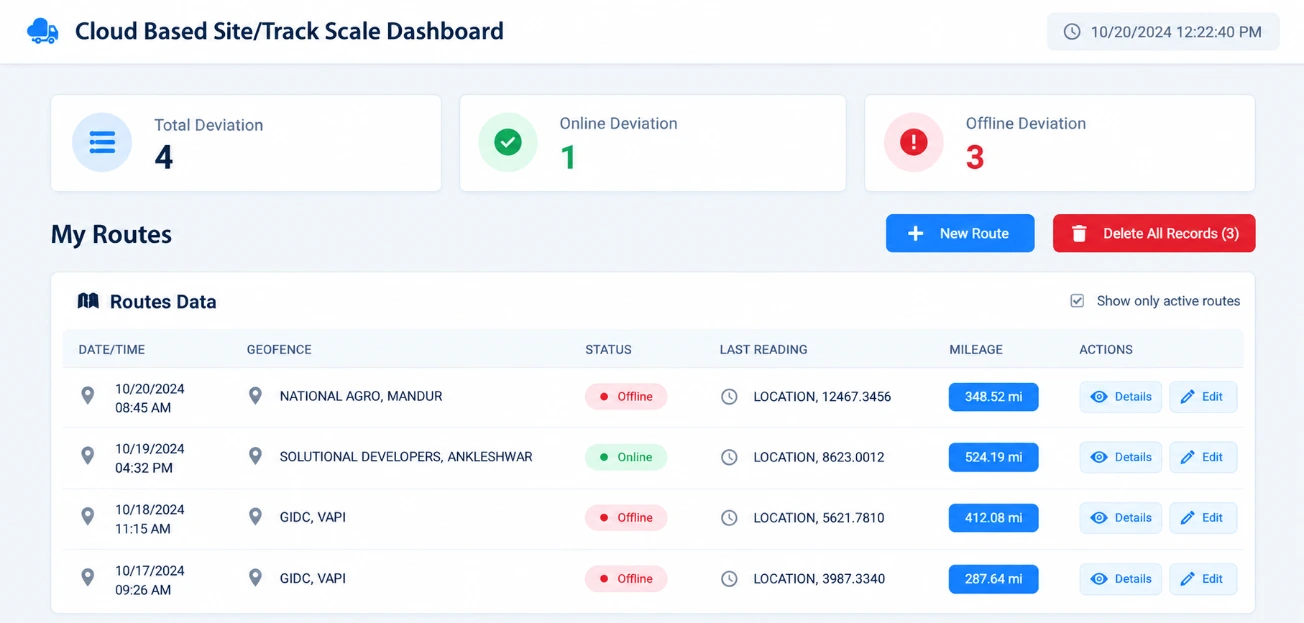
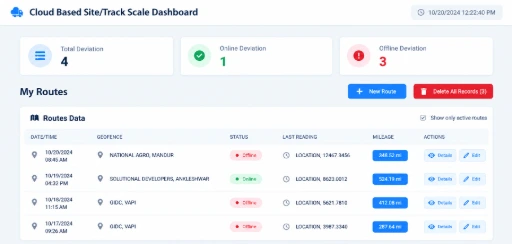
A single screen lists every telemetry device across every monitored tank, flagged online or offline, with a last-communication timestamp. For a distributor managing tanks across multiple sites — and potentially multiple countries — this is the control-room view that manual monitoring could never provide: one glance shows which tanks are reporting normally and which need attention.
Real-Time Graphical Reports
Current weight, temperature, and voltage render as live graphs rather than raw numbers, so a trend (steady consumption, an unusual spike, a slow battery decline) is visually obvious before it becomes a problem requiring a site visit.
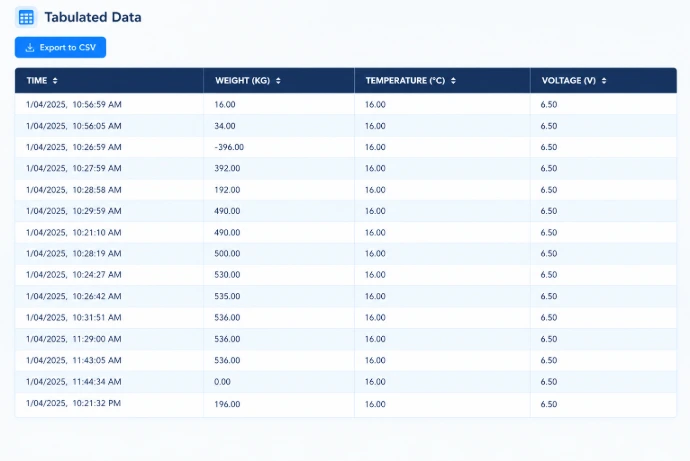
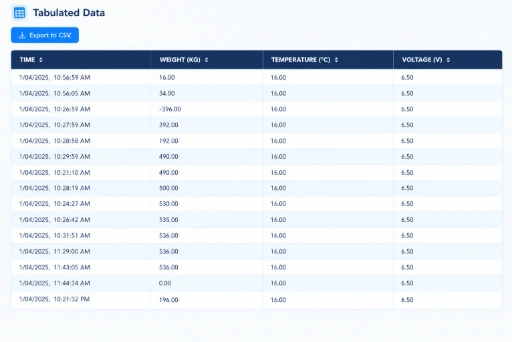
Tabulated Data and Excel/CSV Export
Every reading is also available in structured table form, exportable to Excel or CSV — useful for Carbacid's own internal reporting, for reconciling delivery schedules against actual consumption, or for sharing consumption data with a client as part of a service-level conversation.
Device Management and User Access Control
Administrators can onboard new users, assign them to specific devices, and manage access centrally — meaning a regional manager can see only their sites, while head office retains full oversight, without manually coordinating who has access to what.
SMS Notification Logs and Delivery Tracking
Beyond just sending alerts, the system logs every SMS sent, its exact timestamp, and whether it was successfully delivered — closing the loop so a missed alert can be traced and corrected rather than silently failing.
Tank Consumption Trend Analysis
Daily, weekly, and monthly consumption patterns are tracked automatically, turning what used to be a manual estimation exercise into a data-backed forecasting tool for planning refills and, for Carbacid specifically, for scheduling tanker deliveries across its East African distribution network.
The Results: Measurable Impact for Carbacid
Since deploying the Scalestech tank weighing telemetry system, Carbacid has moved from manual, reactive tank checks to automated, real-time oversight. (Note for Scalestech: replace the illustrative outcomes below with Carbacid's actual measured figures — e.g. a specific percentage reduction in stockout incidents, or an average reduction in emergency-delivery call-outs — once available. Quantified, client-verified numbers are the single highest-leverage addition this page can make; see Section 7 on E-E-A-T.)
Reduced Stockouts and Faster Refill Planning
Automated low-stock alerts mean refill decisions are now triggered by actual consumption data rather than estimated schedules, reducing the risk of a customer-facing CO2 shortage.
Improved Data Accuracy and Faster Troubleshooting
Because weight, temperature, and battery data update continuously and automatically, human transcription error is removed from the process, and an offline or malfunctioning device is flagged within the Connected Devices screen almost immediately rather than at the next scheduled visit.
Why East African Industrial Businesses Need Tank Telemetry
Beyond CO2 — Fuel, LPG, Dairy, and Chemical Tanks
While this case study covers CO2, the same load-cell-based telemetry approach applies to any bulk-stored liquid, gas, or free-flowing solid: LPG and diesel depots, dairy cooperatives' milk-receiving tanks, chemical plants handling corrosive or temperature-sensitive materials, and food and beverage processors batching oils, syrups, or water. Any business in Kenya storing a critical input or product in a tank faces the same core problem Carbacid faced — and the same telemetry approach solves it.
Tank Telemetry for Multi-Country Operations
For businesses distributing across Uganda (Kampala), Tanzania (Dar es Salaam, Arusha), Rwanda (Kigali), Zambia (Lusaka), or Sudan (Khartoum) — the exact secondary markets this audit targets — remote tank telemetry solves a problem that scales with geography: the further a tank is from head office, the more a physical check-in costs in time and travel, and the more valuable a live dashboard reading becomes.
Tank Monitoring in Nairobi, Mombasa, Kisumu, Nakuru, Eldoret, and Thika
Within Kenya specifically, Scalestech installs and supports tank weighing telemetry systems for industrial customers across Nairobi's manufacturing corridor, Mombasa's port-adjacent depots and bottling plants, Kisumu's lake-region agro-processing sector, Nakuru's agricultural and food-processing base, Eldoret's grain and dairy cooperatives, and Thika's industrial zone — giving businesses in each of these hubs the same real-time visibility Carbacid uses across its national and regional network.