Bulk Milk Receiving Scales in Kenya: The Mt. Kenya Milk Case Study
At a dairy's milk reception point, the moment a supplier's delivery is measured is the moment that determines their payment — and the moment that determines whether the dairy's own intake records are trustworthy. This case study documents how Scalestech supplied and installed a DAMPTANK bulk milk receiving scale at Mt. Kenya Milk in Meru, Kenya, replacing volume-based measurement with accurate, hygienic, weight-based milk reception — and what that project reveals about the wider milk-weighing challenge facing dairies and cooperatives across Kenya and East Africa.
About This Project
- Client: Mt. Kenya Milk (Ahiti Dairy)
- Location: Meru, Kenya
- Industry: Dairy Processing
- Solution supplied: Bulk Milk Receiving Scale (DAMPTANK)
- Scope: Installation, calibration, and staff training at the milk reception area
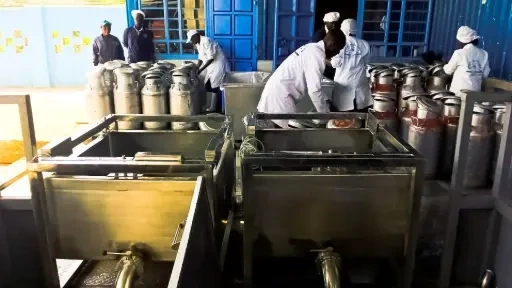
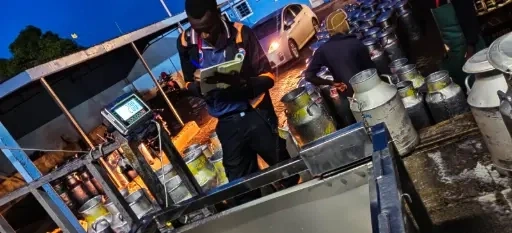
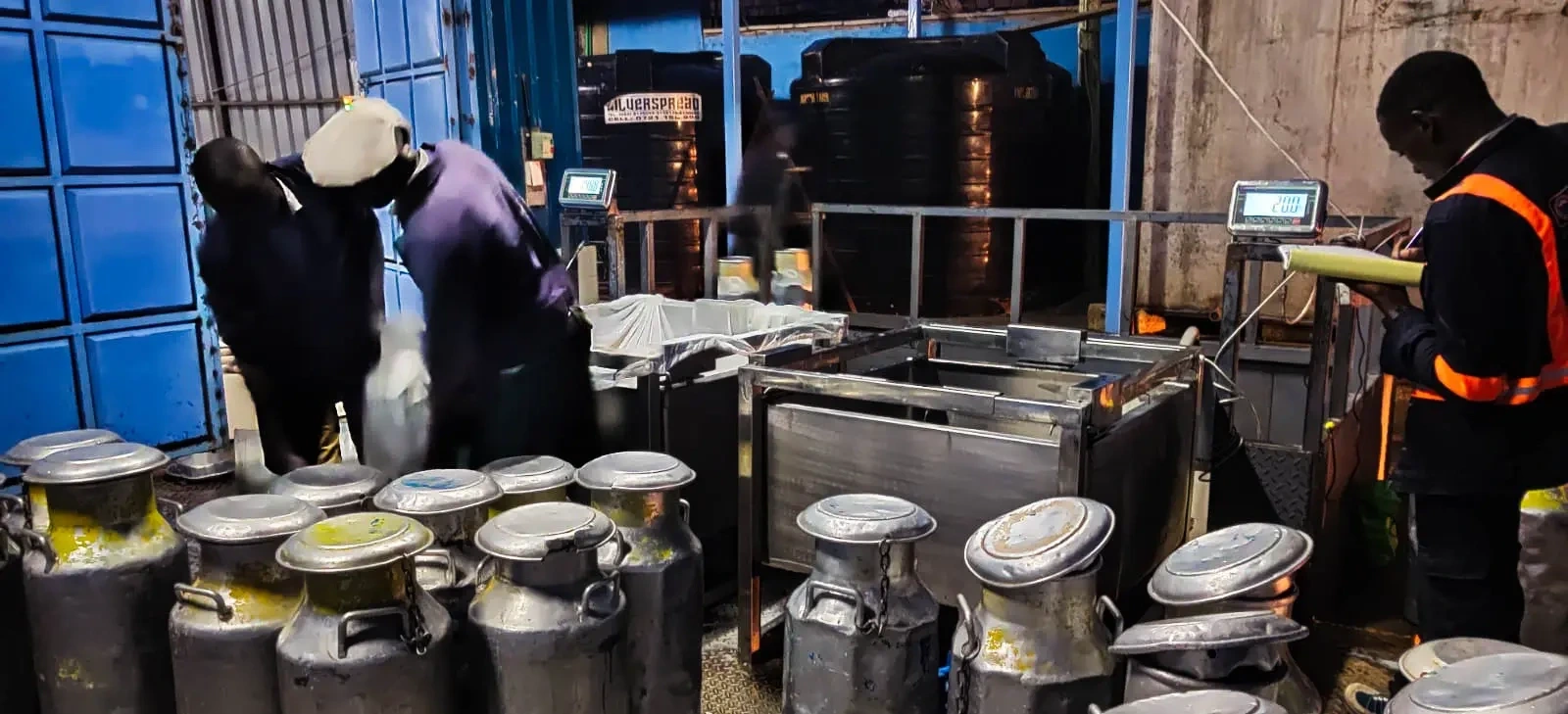
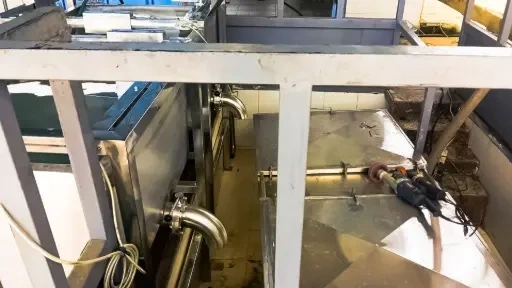
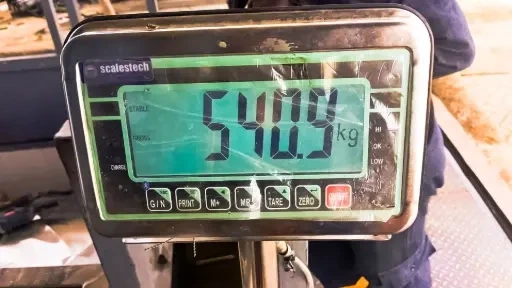
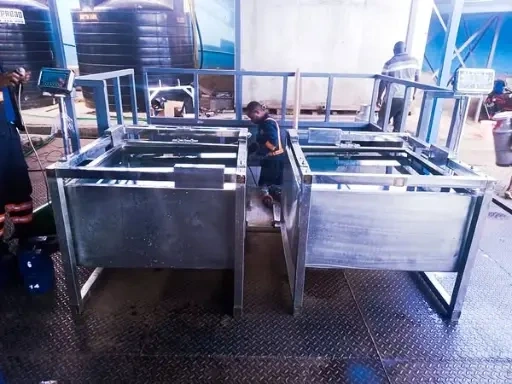
The Challenge: Hygienic, High-Throughput Milk Reception
Before this installation, Mt. Kenya Milk needed a measurement system that could keep pace with its reception-point throughput without compromising the hygiene standards a food-grade dairy operation requires. This is a different engineering problem from weighing produce or livestock: the equipment has to be food-safe, easy to clean between batches or shifts, resistant to the moisture and acidity of dairy handling, and fast enough that it doesn't become the bottleneck in a queue of suppliers arriving at similar times each morning.
The Solution — DAMPTANK Bulk Milk Receiving Scale
Key Features and Specifications
The DAMPTANK installed at Mt. Kenya Milk was specified for accurate, hygienic, high-throughput dairy reception:
- Accurate volume-to-weight measurement — converts incoming milk to a precise weight reading rather than relying on volumetric estimation.
- Customisable capacity — available from 300L to 600L, with larger capacities available on request for higher-throughput reception points.
- Premium food-grade stainless steel construction — rust-resistant and built to hygienic-handling standards appropriate for a dairy environment.
- Seamless integration — compatible with existing milk collection systems and weighing terminals, so the scale can slot into a dairy's current reception workflow rather than requiring a full process rebuild.
- Efficient drainage — a smooth internal surface and quick-drain design that keeps cleaning fast and thorough between collection runs.
Why Weight-Based Measurement Beats Volume-Based Measurement
The core advantage of a system like the DAMPTANK is that it removes the variability volume-based measurement introduces. Weight doesn't shift with temperature or handling the way volume can, which means a supplier delivering the same quantity of milk gets a consistent reading regardless of when in the day or under what conditions the delivery happens — a meaningful trust factor for cooperatives bulking milk from many smallholder members who each need to see their own contribution measured fairly.
Hygiene and Food-Grade Build Quality
Dairy reception equipment lives at the most hygiene-sensitive point in the milk value chain — the moment raw milk changes hands from supplier to processor. The DAMPTANK's food-grade stainless steel construction and quick-drain design exist specifically to meet that standard, minimising the risk of contamination or residue build-up between collection runs.
Implementation Process
Site Assessment and Planning
Scalestech began with a thorough assessment of Mt. Kenya Milk's existing milk collection process — reviewing daily intake volumes, delivery patterns, existing measurement equipment, and reception-area layout — to identify exactly where the current process created delay or measurement uncertainty, and to size the DAMPTANK correctly for the dairy's actual throughput.
Installation at the Milk Reception Area
The DAMPTANK was installed at the milk reception area, positioned for optimal workflow efficiency so that incoming deliveries could be measured with minimal handling and minimal queue disruption during peak collection hours.
Calibration and Testing
The system was calibrated and tested to confirm accurate measurement and seamless integration with Mt. Kenya Milk's existing processes and weighing terminals — a step that determines whether the scale holds its accuracy through months of daily dairy use rather than drifting after the first few weeks.
Staff Training and Handover
Reception staff were trained on operating the new system, including the cleaning and maintenance procedures specific to food-grade dairy equipment — critical for a piece of equipment that has to be sanitised as part of the daily routine, not just serviced occasionally.
Results and Impact
For Milk Suppliers and Farmers
Suppliers delivering to Mt. Kenya Milk now have their milk measured by a system built for accuracy rather than volumetric estimation — a direct improvement in the fairness and consistency of the compensation calculation, and a meaningful trust signal for cooperative-affiliated suppliers whose members depend on that accuracy being defensible.
For Mt. Kenya Milk's Operations
The streamlined reception process reduced the time required for milk collection and measurement, easing pressure at peak delivery times. Improved measurement accuracy also supports better inventory and intake record-keeping — data that feeds directly into a processor's planning for cooling, processing, and distribution.
Quality and Hygiene Outcomes
The DAMPTANK's hygienic, easy-to-clean design minimised handling and downtime, helping preserve milk quality from the point of reception onward — and, in combination with faster throughput and improved accuracy, contributed to the operational efficiency gains that underpin Mt. Kenya Milk's profitability at the reception stage of its business.
Beyond This Project: Dairy Weighing Across Kenya and East Africa
Serving Kenya's Dairy Belt
The measurement challenge this project addressed is common across Kenya's dairy-producing regions. Scalestech supplies and installs dairy weighing equipment across Meru and the wider Mt. Kenya region, Nakuru — one of Kenya's highest milk-yielding counties — Eldoret, Nairobi and its peri-urban dairy belt, and Kiambu, alongside the broader network of cities it serves nationally including Mombasa, Kisumu, and Thika. In each of these regions, dairies and cooperatives face the same underlying need: accurate, hygienic, weight-based milk measurement that can be trusted by both supplier and processor.
Regional Reach — Uganda, Tanzania, Rwanda, Zambia, Sudan
The same DAMPTANK-class solution applies equally to dairy cooperatives and processors across East Africa's wider dairy economies. Scalestech supplies and supports clients in Kampala (Uganda), Dar es Salaam and Arusha (Tanzania), Kigali (Rwanda), Lusaka (Zambia), and Khartoum (Sudan), where growing dairy sectors face comparable accuracy, hygiene, and throughput demands at milk reception points.
Why Dairies and Cooperatives Choose Scalestech
Certification and Compliance
Scalestech's dairy weighing equipment is supplied and calibrated to comply with Weights and Measures Kenya (KEBS) legal metrology requirements, and the company holds KENAS ISO/IEC 17025:2017 accreditation for its calibration services — meaning the weight readings a dairy uses to pay suppliers are backed by a nationally recognised calibration standard.
After-Sales Support and Calibration Services
Dairy reception equipment needs to hold its accuracy through continuous daily use in a hygiene-sensitive environment. Scalestech's installations are backed by ongoing calibration and after-sales service, keeping equipment accurate — and food-safe — well beyond the initial installation.