10-Ton Industrial Floor Scale Case Study: RwandAir Cargo Operations, Kigali
Project Snapshot
Client: RwandAir, Rwanda's national carrier
Location: Kigali, Rwanda
Equipment installed: 1 x 10-ton heavy-duty industrial floor scale
Application: Air cargo weighing ahead of loading and manifest declaration
Scope: Site assessment, supply, cross-border delivery, installation, calibration, and certification
Outcome: A permanent, legal-for-trade weighing point integrated into RwandAir's cargo handling workflow at Kigali International Airport (KGL)
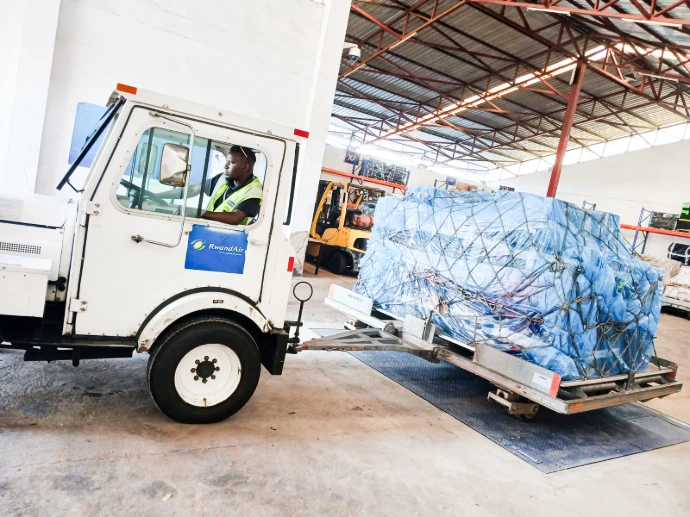
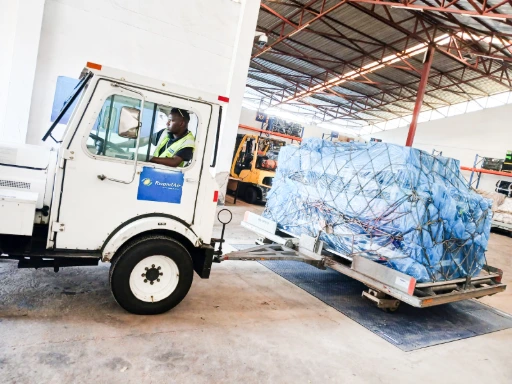
The Challenge: Accurate, Fast Cargo Weighing at Kigali International Airport
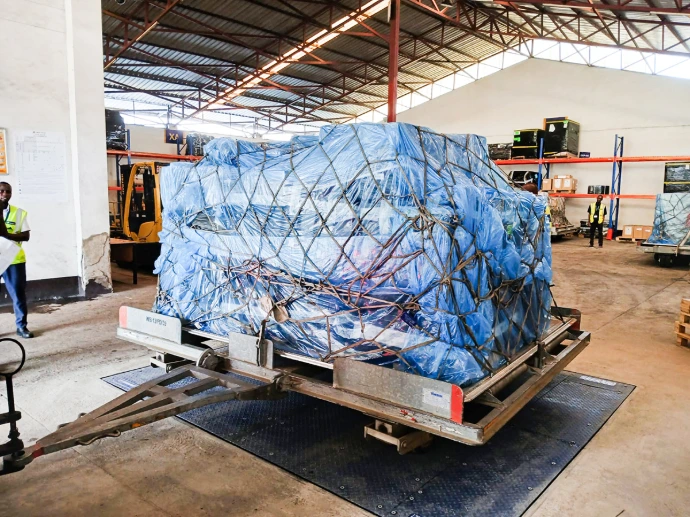
Air cargo economics run on grams, not kilograms. Every shipment loaded onto a RwandAir aircraft — whether commercial freight, e-commerce parcels, pharmaceuticals, perishables, or humanitarian relief goods — has to be weighed accurately before it is manifested, because the declared weight feeds directly into the aircraft's weight-and-balance calculation. Kigali International Airport (IATA: KGL) has grown steadily as a regional freight and transit point, and RwandAir's own cargo division has expanded in step, adding freighter capacity on routes such as Kigali–Dubai and Kigali–Djibouti alongside bellyhold cargo on its passenger network. That growth put pressure on the airline's ground handling process: cargo build-up areas needed a weighing point that could handle bulk consignments quickly, survive constant use by forklifts and pallet trucks, and produce numbers that would stand up to an audit.
Why Standard Platform Scales Weren't Enough
A typical retail or warehouse platform scale — the kind rated for a few hundred kilograms to two or three tons — simply doesn't have the capacity or the deck size for palletized air cargo. Bulk consignments, ULDs (unit load devices) being pre-weighed before build-up, and heavier freight categories like machinery parts or bulk agricultural exports regularly exceed what a light-duty platform scale can handle. Pushing those loads onto undersized equipment either damages the scale over time or, worse, produces drift in the readings — which is a real operational risk when the number on the ticket determines how an aircraft is loaded.
What RwandAir Needed From a Weighing Solution
The brief Scalestech worked from had four non-negotiables: a capacity high enough to comfortably handle the heaviest single consignments and multi-pallet loads without operating near the scale's limit; a low-profile, ground-level platform that forklifts and pallet jacks could drive straight onto, rather than a raised platform requiring a ramp; a build robust enough for a high-traffic cargo warehouse floor running multiple shifts; and full calibration to a recognized standard, with certification paperwork that would hold up under both internal audit and regulatory inspection.
Technical Specifications
Specification | Detail |
|---|---|
Maximum capacity | 10,000 kg (10 tons) |
Platform construction | Heavy-duty checker-plate steel deck, low-profile design for direct forklift and pallet-truck access |
Load cell configuration | Multi-point load cell array (4-point), sized for even weight distribution across uneven or off-center cargo placement |
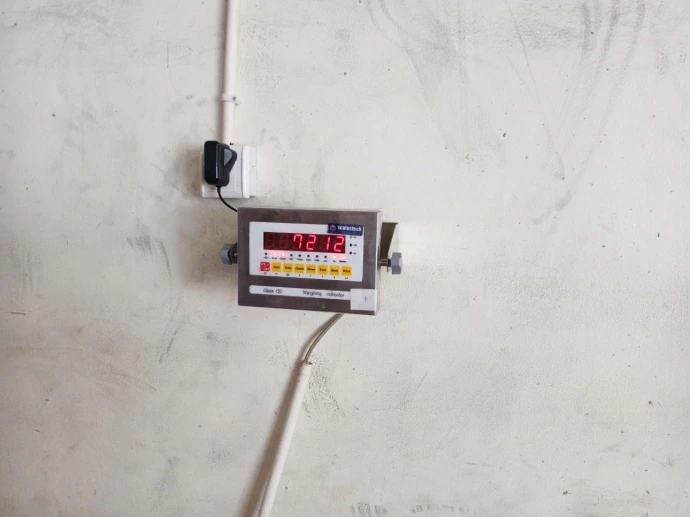
Display / indicator | Digital weighing indicator with tare, zero, and hold functions |
Power | AC mains with battery backup option for uninterrupted cargo-floor operation |
Environment rating | Built for warehouse and airside cargo-floor conditions, including dust and frequent equipment traffic |
Certification | Calibrated and tested against recognized trade metrology standards prior to sign-off |
Optional accessories | Access ramps, remote/wireless indicator display, ticket printer for manifest documentation |
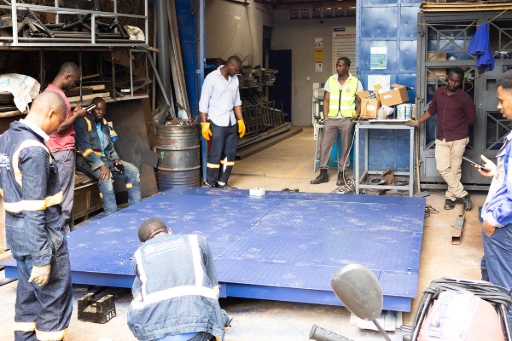
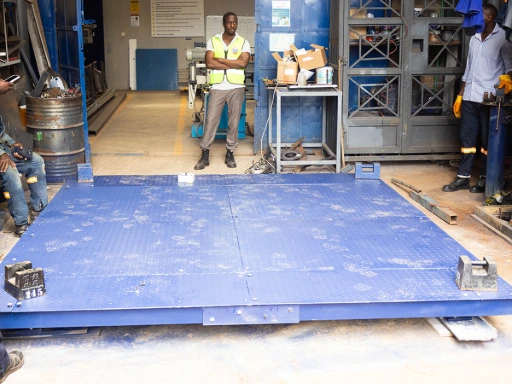
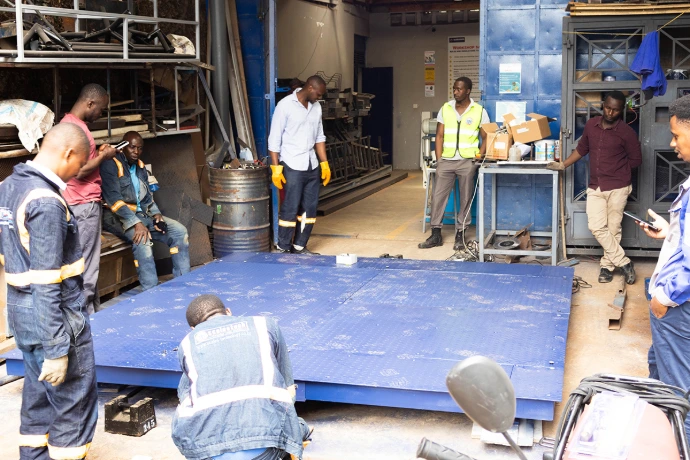
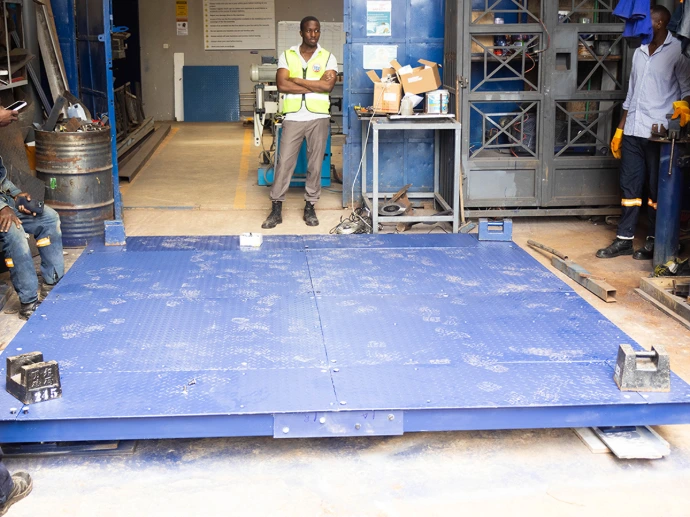
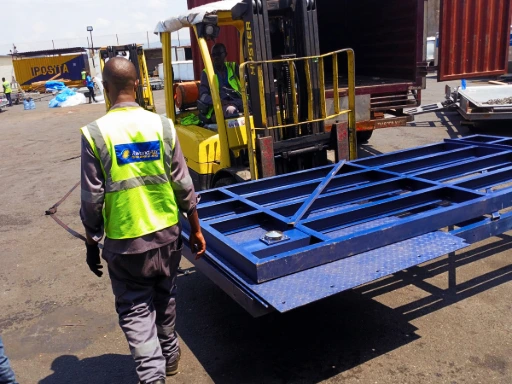
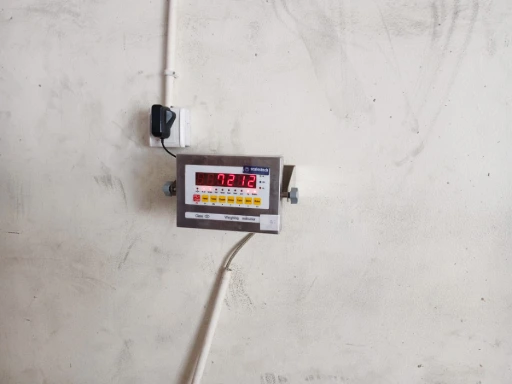
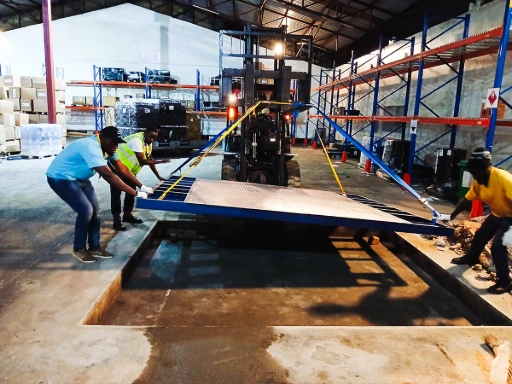
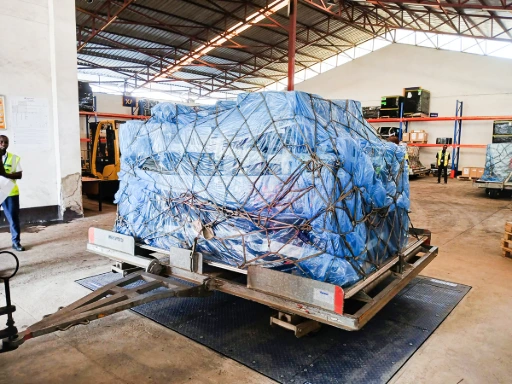
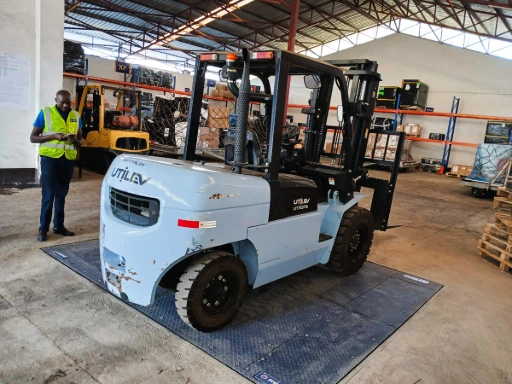
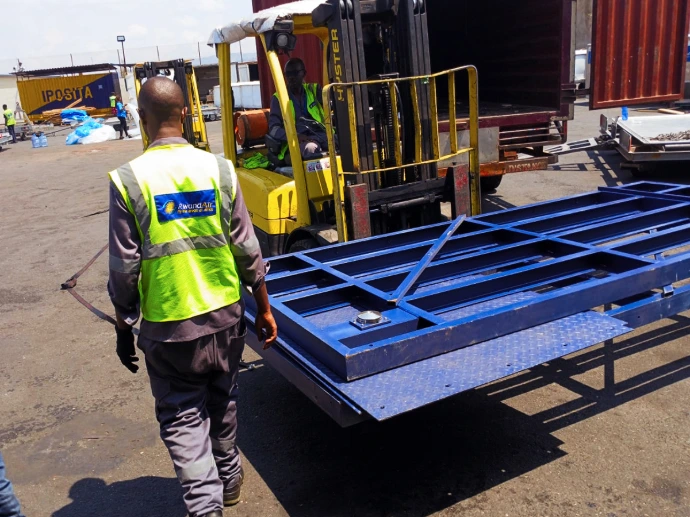
Installation: From Nairobi to Kigali
Site Assessment and Load Cell Configuration
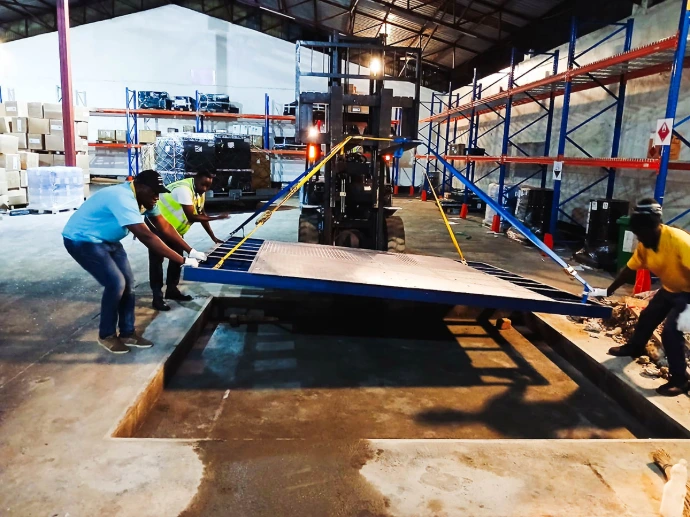
Before shipping any equipment, Scalestech's team assessed the intended installation point inside RwandAir's Kigali cargo facility: floor levelness, existing traffic patterns for forklifts and pallet trucks, and the power supply available for the digital indicator. That assessment determined the final load cell configuration and confirmed the floor scale could be positioned without disrupting the existing cargo flow.
Cross-Border Delivery and Logistics
Installing heavy industrial equipment in Rwanda from a Kenya-based supplier means the logistics chain matters as much as the engineering. The floor scale and its components were transported from Nairobi through the regional road corridor into Kigali, cleared through the relevant border and customs processes, and delivered directly to the airport cargo facility for installation — the same corridor Scalestech's team uses for equipment and parts moving into Uganda, Tanzania, Rwanda, and beyond as part of its wider East African service footprint.
Calibration, Testing, and Sign-Off
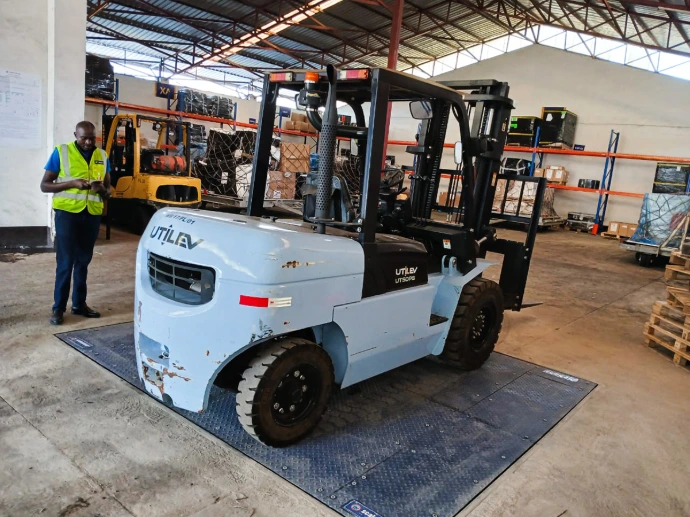
Once positioned, the scale was calibrated using certified test weights across its working range — not just at zero and at full capacity, but at the mid-range points where the equipment does most of its daily work — to confirm linearity and repeatability. The installation was signed off only once test readings held within the required tolerance across repeated load-and-unload cycles, replicating how the scale would actually be used on a live cargo floor.
Results: What Changed for RwandAir Cargo Operations
With a properly sized, ground-level floor scale in place, RwandAir's Kigali cargo team gained a weighing point built for the actual scale of its operation: consignments that used to strain the limits of lighter equipment now sit well within the scale's rated capacity, forklift and pallet-truck access is direct rather than requiring a ramp approach, and the calibration and certification paperwork gives ground handling and finance teams a defensible, auditable weight on every manifest. It's a small piece of infrastructure — a steel platform set into a concrete floor — but it sits directly in the path of every piece of cargo the airline moves through Kigali.
Floor Scales for Airlines and Logistics Operators Across East Africa
The requirements behind the RwandAir installation — high capacity, ground-level access, durability under constant equipment traffic, and calibration to a recognized standard — are close to universal across East African cargo and logistics operations, whether the buyer is an airline, a freight forwarder, a bonded warehouse, or a manufacturer shipping bulk goods. Scalestech supplies and installs the same class of heavy-duty floor scale across the region:
Kenya — Nairobi (JKIA) and Mombasa
Nairobi's Jomo Kenyatta International Airport and the Mombasa port corridor are Scalestech's home market for cargo and logistics weighing — floor scales for airfreight build-up areas, bonded warehouses, and clearing agents handling containerized and palletized cargo moving through the port.
Uganda — Entebbe and Kampala
Entebbe International Airport's growing cargo volumes and Kampala's inland logistics hubs follow a similar pattern to Kigali: freight forwarders and airlines need floor-level weighing that survives forklift traffic without the civil works a weighbridge requires.
Tanzania — Dar es Salaam and Arusha
Dar es Salaam's port and airport cargo facilities, alongside Arusha's role as a logistics point for northern Tanzania and cross-border trade into Kenya, present the same requirement for durable, calibrated floor scales in high-throughput cargo environments.
Rwanda — Kigali
Beyond the RwandAir installation itself, Kigali's broader logistics and freight-forwarding sector — supporting Rwanda's coffee, tea, and horticultural export trade in addition to air cargo — relies on the same category of equipment for warehouse and pre-shipment weighing.
Zambia — Lusaka
As a landlocked logistics hub feeding trade corridors into the DRC, Malawi, and beyond, Lusaka's freight and warehousing operators need floor scales built for continuous, heavy-duty use rather than light commercial equipment.
Sudan — Khartoum
Khartoum's logistics and industrial sector has the same underlying need — accurate, durable, ground-level weighing for bulk and palletized goods moving through warehouses and transport hubs.