Fully Automated 80-Ton Weighbridge Installation in Mai Mahiu, Nakuru County
Project Snapshot
Location: Mai Mahiu, Nakuru County, Kenya
Weighbridge type: Digital, fully automated static weighbridge
Capacity: 80 tons
Deck: ESIT steel weighbridge deck
Key equipment: High-precision load cells, CCTV surveillance, dedicated control room, certified calibration tools, integrated weighbridge management software
Industry served: Logistics, transport and heavy industry along the Nairobi–Narok–Maasai Mara and Nairobi–Nakuru corridors
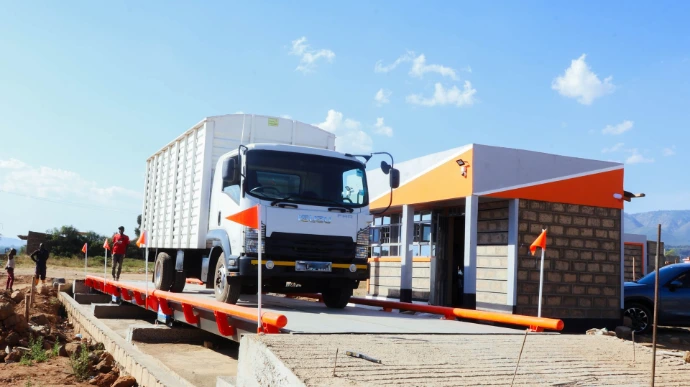
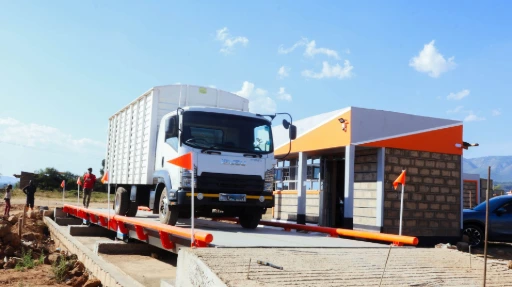
Step-by-Step Weighbridge Installation Process
Scalestech’s engineering team followed an eight-stage installation methodology on site in Mai Mahiu, the same process the company applies across its Kenyan and East African weighbridge projects.
1. Site Assessment & Planning
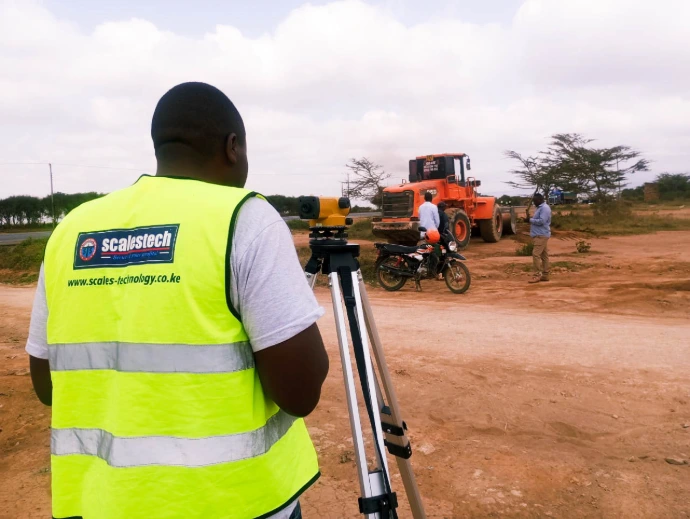
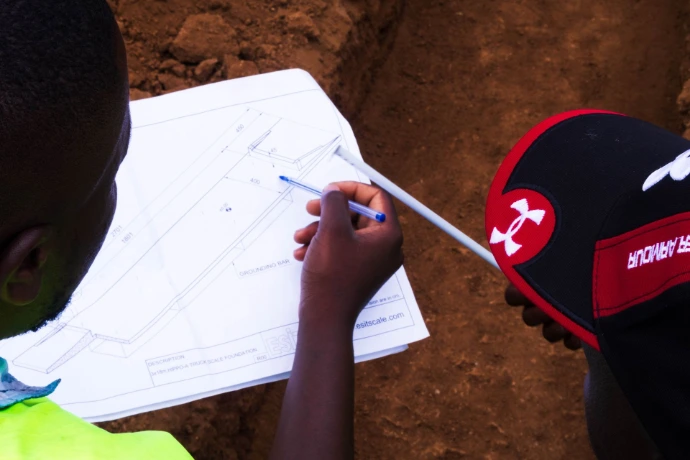
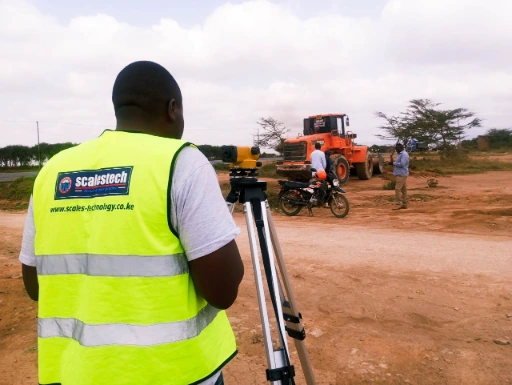
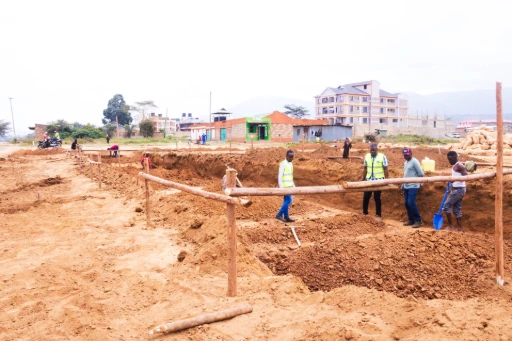
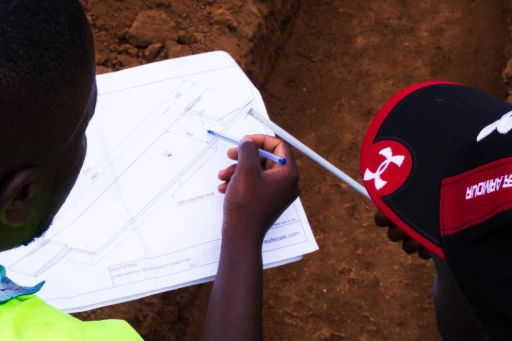
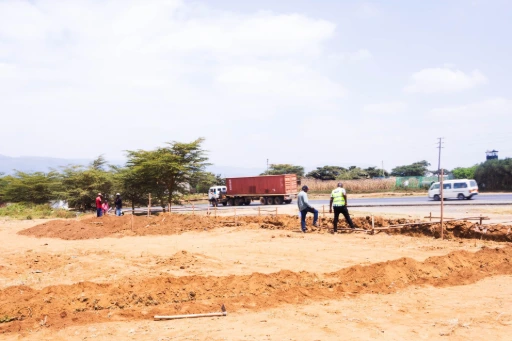
Before any groundwork began, Scalestech engineers carried out a full site survey covering ground suitability, vehicle access flow, and how the weighbridge would integrate with the client’s existing yard operations. Because Mai Mahiu sees a heavy mix of long-haul trucks, quarry tippers and construction plant, the survey paid particular attention to queueing space and turning radius so that vehicle flow would not back up onto the public road during peak periods. The team also mapped underground utilities and confirmed the deck orientation against prevailing traffic direction, so that loaded trucks arriving from the Nairobi–Nakuru highway could approach, weigh and exit without needing to reverse or cross oncoming lanes.
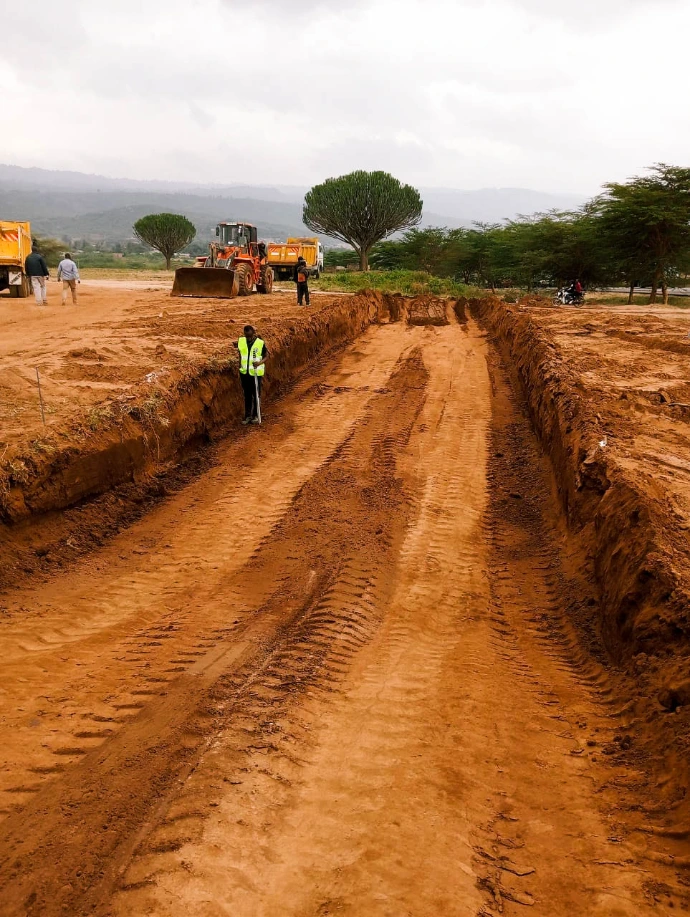
2. Ground Breaking & Civil Works
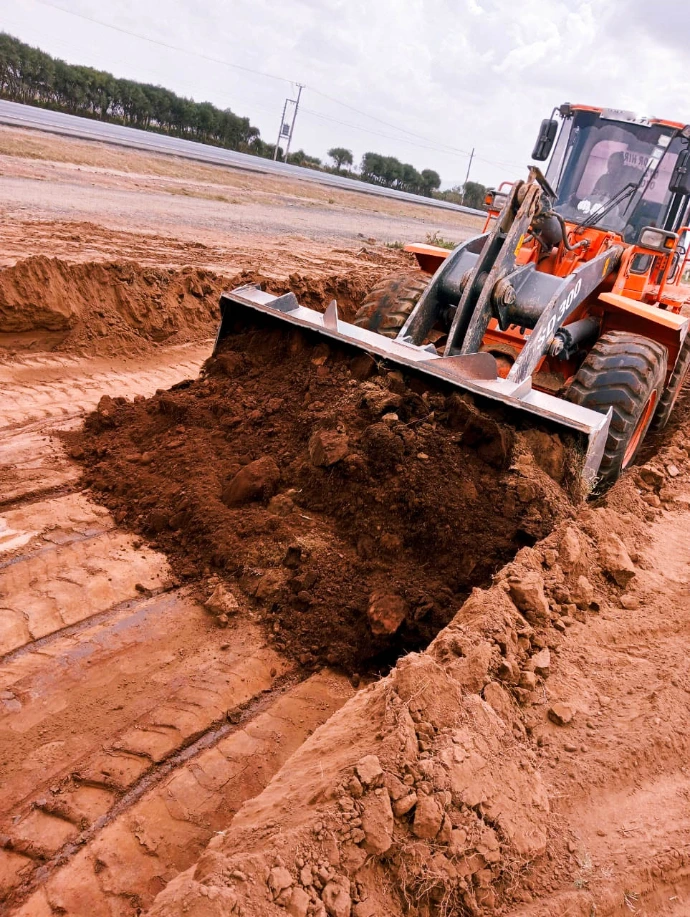
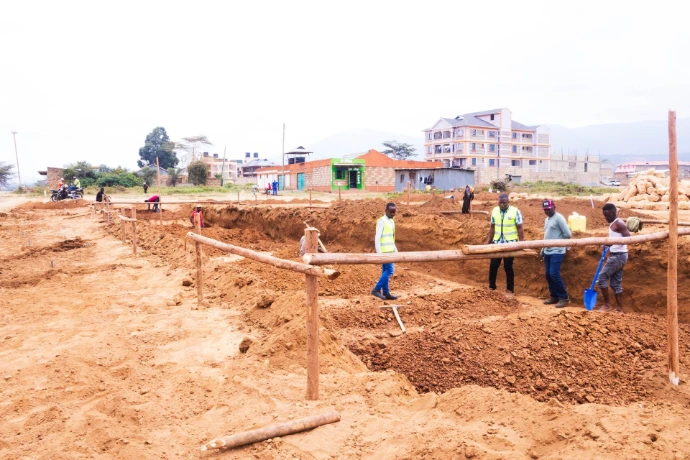
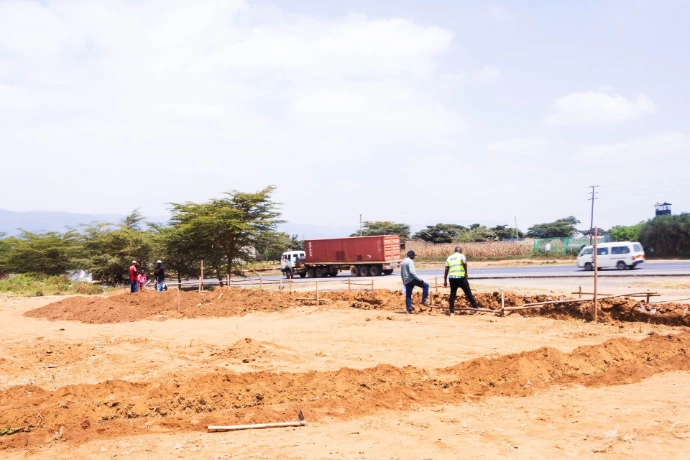
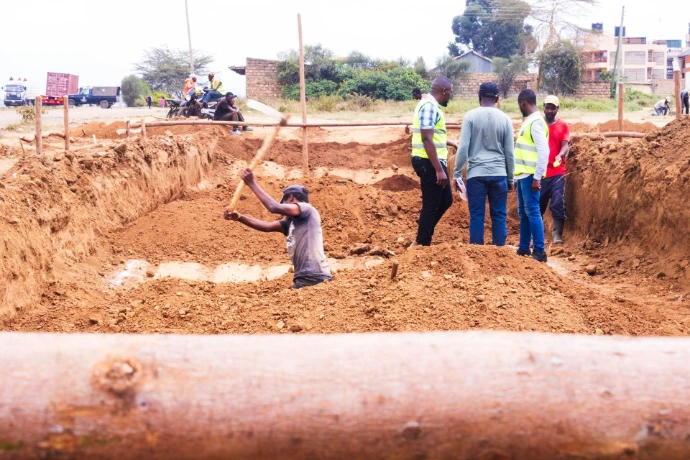
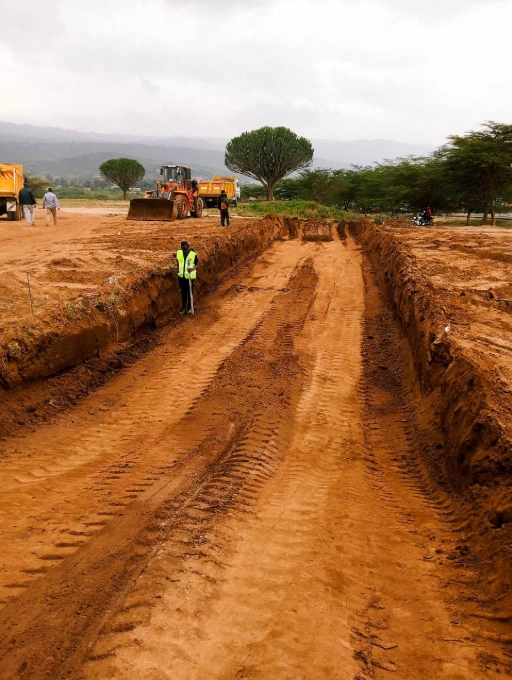
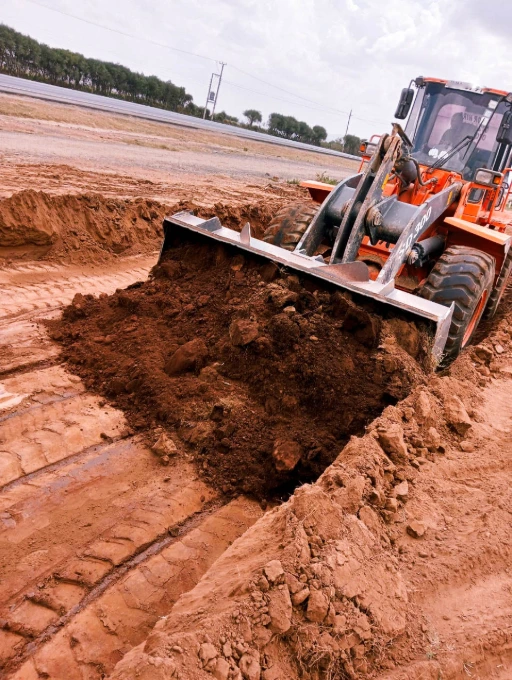
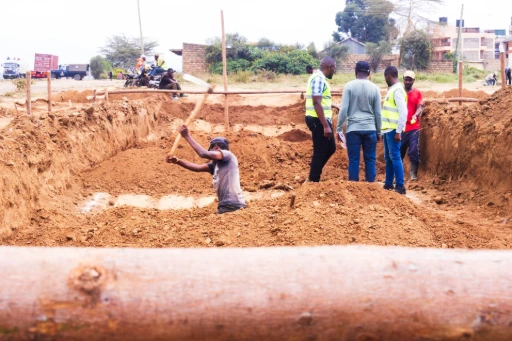
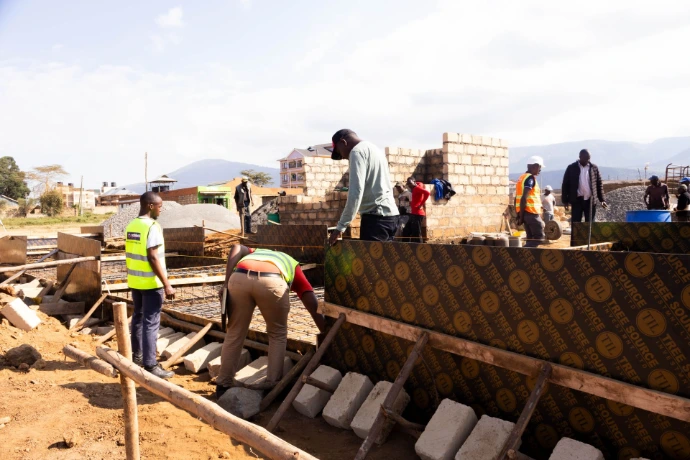
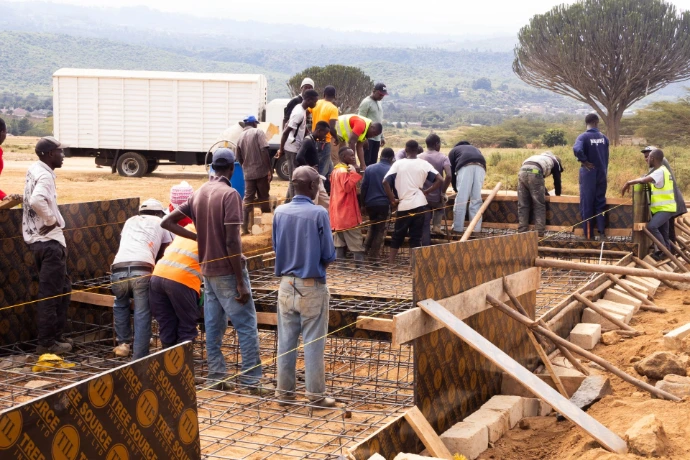
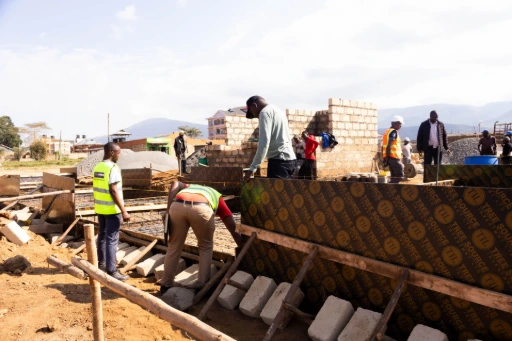
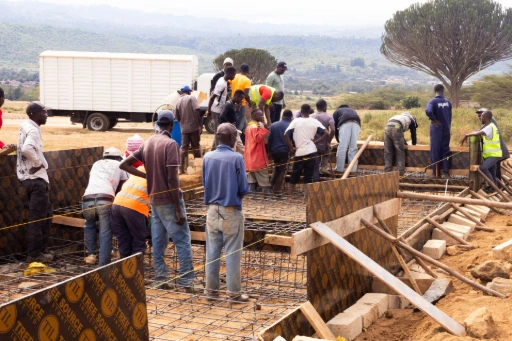
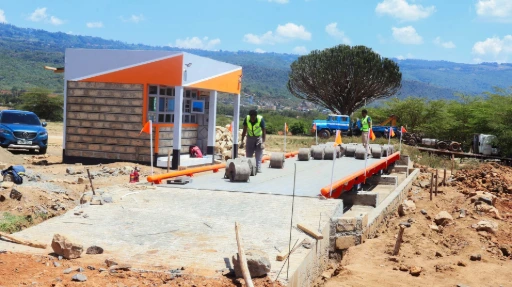
Once the site plan was approved, the team carried out excavation and groundwork preparation, including soil leveling and a drainage layout designed to keep the weighbridge pit clear of standing water — an important detail in a region that experiences intense seasonal rainfall and has seen serious flood events in nearby villages in recent years. Proper drainage at this stage protects both the concrete foundation and the load cells from long-term water damage. Excavation depth and compaction were checked against the volcanic, relatively loose soils typical of the Rift Valley floor, rather than assumed from a generic specification.
3. Deck Foundation Construction
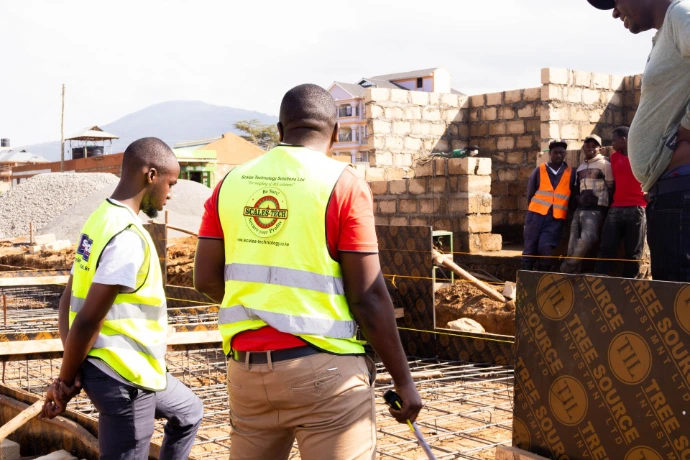
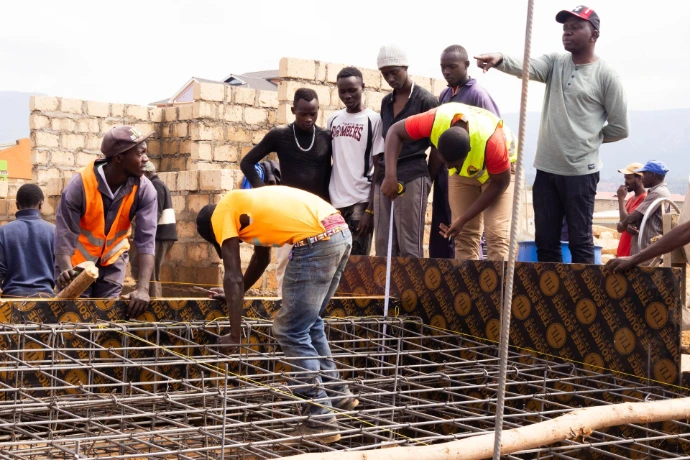
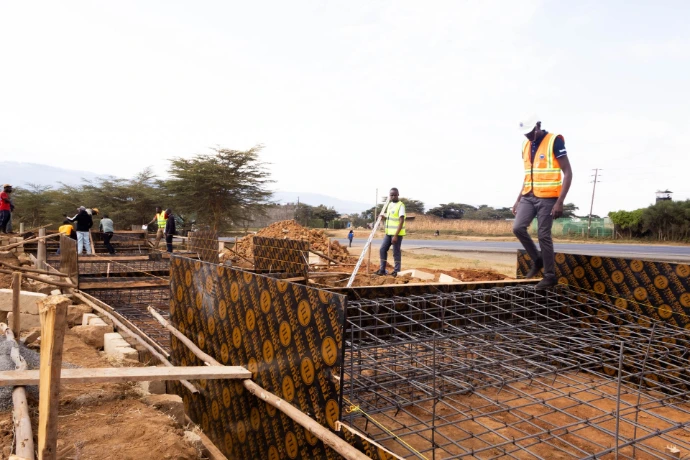
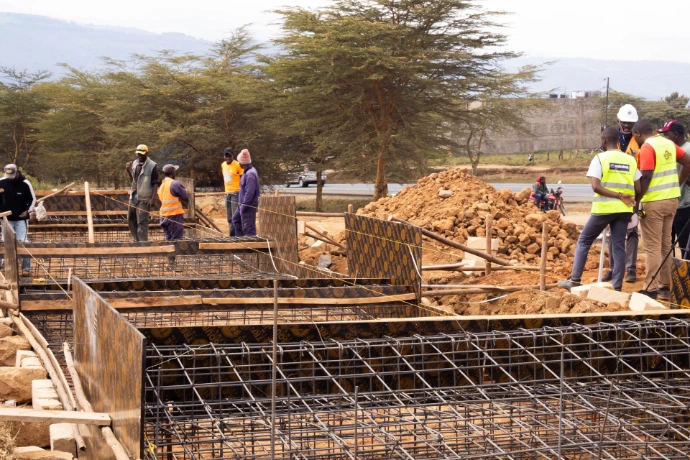
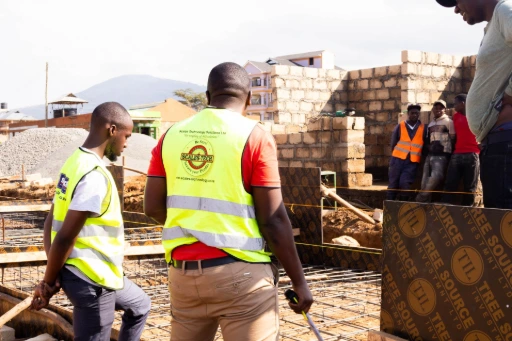
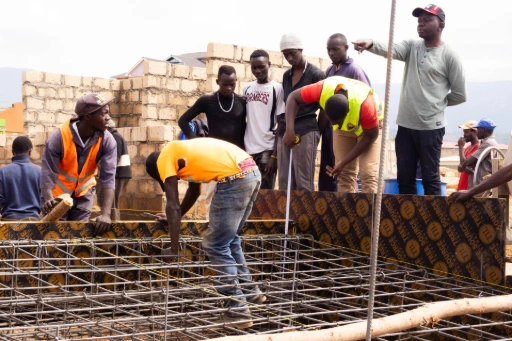
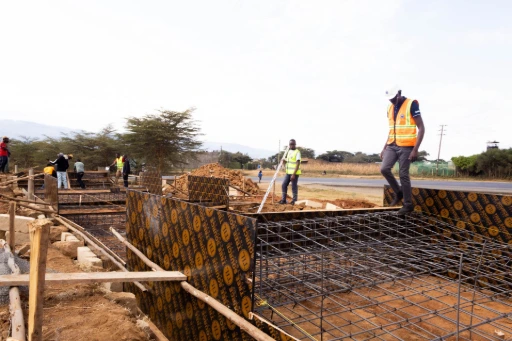
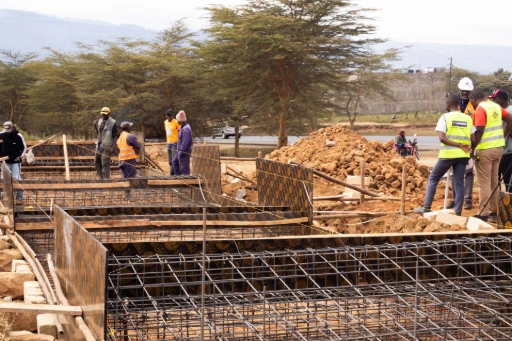
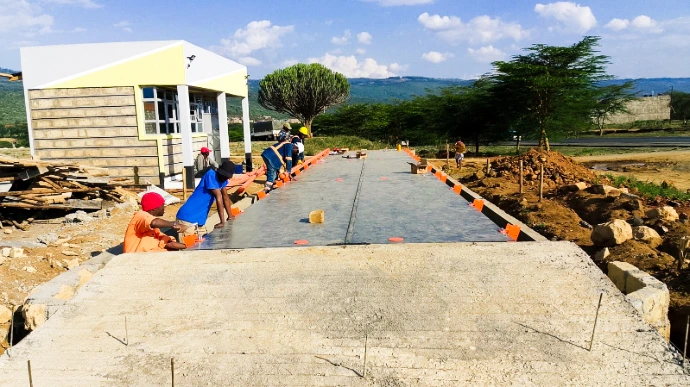
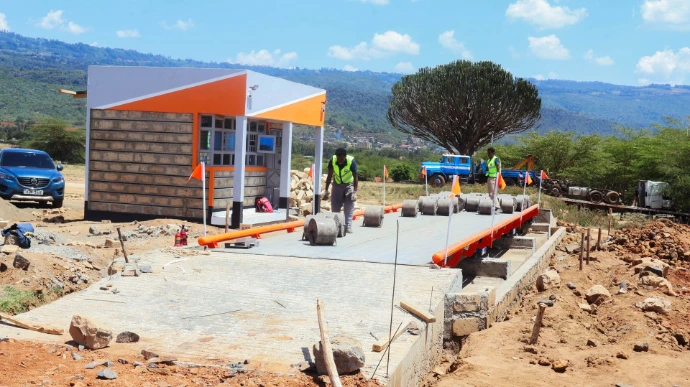
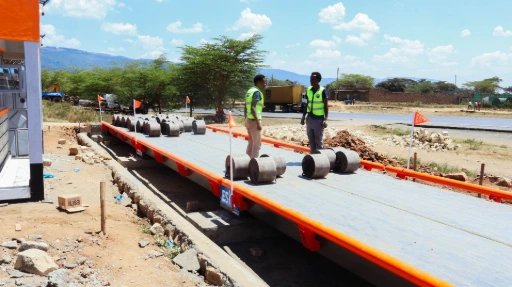
Scalestech’s team then poured a reinforced concrete foundation engineered to carry the full 80-ton rated load of the ESIT weighbridge deck. Foundation quality is the single biggest determinant of a weighbridge’s long-term accuracy: any settling or unevenness in the concrete base will eventually show up as drift in the weight readings, so the foundation was built to a tolerance well within ESIT’s installation specification before deck placement began. The concrete was left to cure fully before any deck loading was applied, avoiding the early-life settling that shortens the service life of foundations poured and loaded too quickly.
4. Control Room Setup
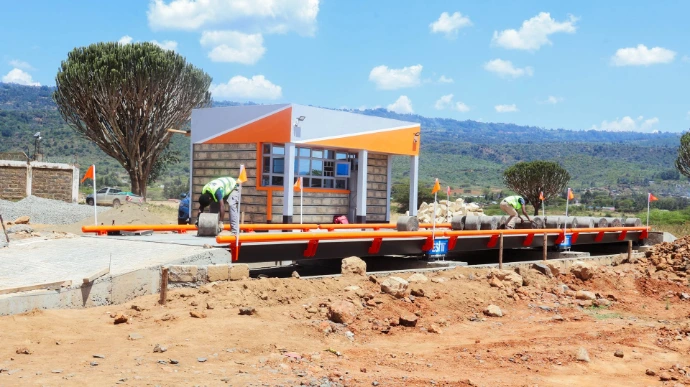
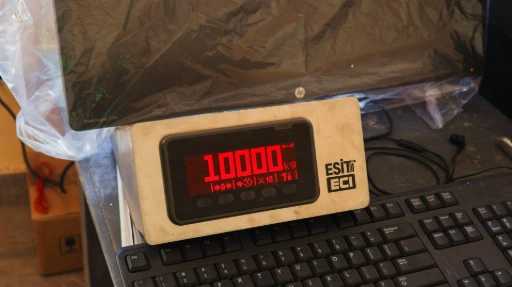
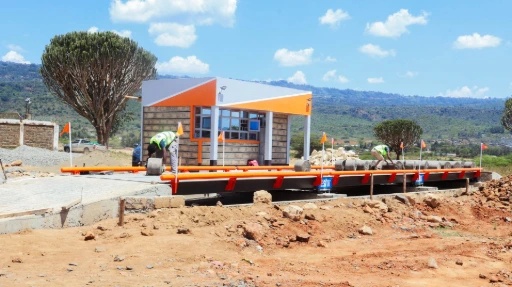
A dedicated control room was constructed on site to house the weighbridge software, monitoring displays and operator interface. Housing the control point in a purpose-built room — rather than a temporary cabin — keeps the electronics protected from dust and heat, gives the operator a clear line of sight to the deck, and creates a single, auditable point from which every weighing transaction is logged. The room was positioned to give the operator an unobstructed view of both the approach lane and the CCTV monitor bank installed in Step 6.
5. Deck & Load Cell Installation
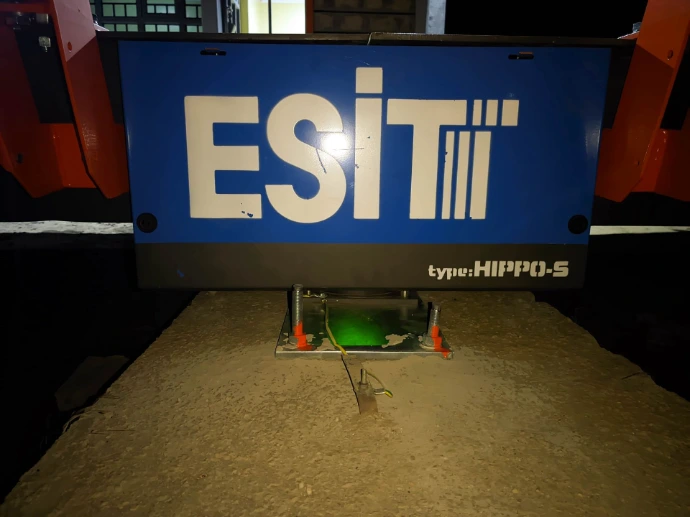
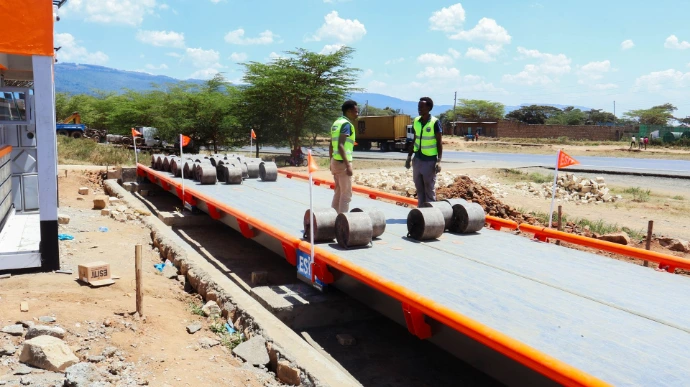
With the foundation cured, the ESIT steel deck was lifted into position and precisely aligned over the prepared base. High-precision load cells were then mounted at each corner of the deck and wired into the junction box, the component that combines each cell’s signal into the single weight reading the operator sees on screen. Correct load cell alignment at this stage is what allows the finished system to meet Kenyan legal-for-trade accuracy tolerances. Each cell was individually tested for signal integrity before the deck was sealed, so any wiring fault could be corrected while the deck was still accessible rather than after the site was handed over.
6. Weighbridge Software Configuration
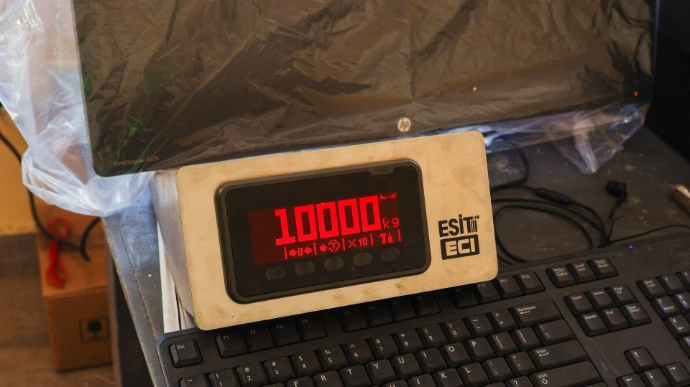
Scalestech deployed its weighbridge management software to automate ticket printing, data capture and reporting. The system records vehicle registration, gross weight, tare weight, net weight and timestamp for every transaction, and exports the data in formats the client’s logistics and finance teams can reconcile against delivery notes and invoices without manual re-entry. Access levels were configured so that operators can process transactions while only supervisors can edit stored records, keeping the audit trail intact.

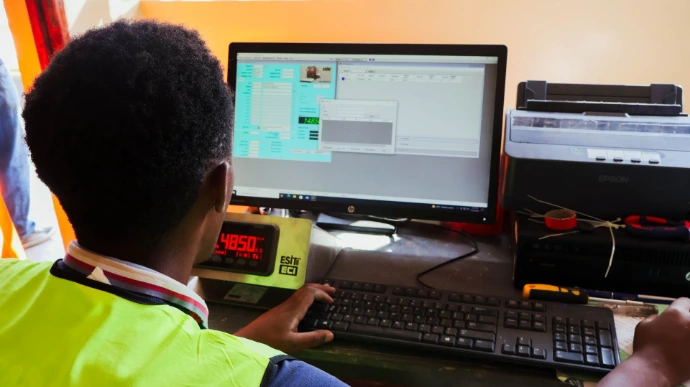

8. Calibration & Testing
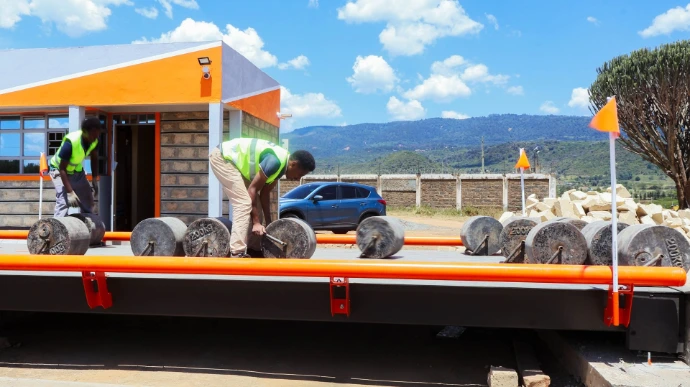
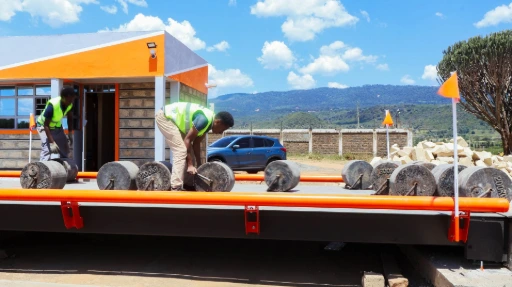
The final stage was full calibration using certified test weights, checked against multiple load points across the deck to confirm the system met Kenyan Weights & Measures accuracy requirements before handover. Readings were tested at zero load, partial load and full 80-ton load to confirm linearity across the full weighing range, not just at a single reference point. Only after this verification step did Scalestech sign the weighbridge off as ready for commercial use.
Why Weighbridge Accuracy Matters for Billing and Compliance
An inaccurate weighbridge is expensive in more than one direction. Under-reading a load means a transporter or quarry operator bills for less cargo than was actually moved, quietly eroding revenue on every transaction. Over-reading pushes a vehicle over its legal axle load threshold on paper even when the physical load is compliant, exposing the client to disputes, delayed dispatch, or penalties if the discrepancy is later checked against a public KeNHA weighbridge along the route. Both failure modes trace back to the same root causes: a foundation that has settled unevenly, load cells that have drifted out of calibration, or software that has not been reconciled against a certified test weight recently enough. This is why Scalestech treats calibration as a project milestone rather than an afterthought, and why the Mai Mahiu system was tested across its full weighing range — from zero load to the full 80-ton capacity — before being signed off for commercial use.
Why Choose Scalestech for Weighbridge Installation in Kenya
Scalestech handles every stage of a weighbridge project in-house — site survey, civil works coordination, ESIT deck and load-cell installation, software configuration, CCTV integration and KEBS-relevant calibration — rather than subcontracting pieces of the job to third parties. That single point of accountability is what let the Mai Mahiu project move from site assessment to a fully calibrated, camera-verified system without the handoff delays that typically slow multi-vendor weighbridge installations. The same team also provides ongoing calibration and maintenance after handover, so clients are not left sourcing a separate service provider once the installation is complete.
For clients evaluating vendors, the practical questions worth asking are: who does the civil works, who supplies and certifies the load cells, who configures the software, and who is responsible for calibration after commissioning? Where those answers point to three or four different companies, project timelines and accountability both tend to suffer. Scalestech’s Mai Mahiu project — and its wider portfolio of 40-ton through 100-ton weighbridge installations across Kenya, Uganda, Tanzania, Rwanda, Zambia and Sudan — was delivered end-to-end by one team, which is the model the company applies on every subsequent installation.
Weighbridge Installation Across Kenya and East Africa
Nairobi, Mombasa, Kisumu, Nakuru, Eldoret and Thika
Beyond Mai Mahiu, Scalestech installs and services 40-ton, 60-ton, 80-ton and 100-ton electronic weighbridges for logistics, manufacturing, mining and agricultural clients across Kenya’s major commercial hubs, including Nairobi, the Mombasa port corridor, Kisumu, greater Nakuru County, Eldoret and Thika. Each installation follows the same eight-stage methodology used in Mai Mahiu, adapted to the client’s site conditions and required capacity.
Uganda, Tanzania, Rwanda, Zambia and Sudan
Scalestech also supports weighbridge and industrial weighing projects for clients in Uganda (Kampala), Tanzania (Dar es Salaam and Arusha), Rwanda (Kigali), Zambia (Lusaka) and Sudan (Khartoum), extending the same ESIT-based deck and calibration standard used at Mai Mahiu to transport, mining and agricultural operators across the wider East and Central African region.