
In a butchery, every gram is profit or loss. A scale that reads 50 g light on every sale quietly gives away stock; one that reads heavy loses customers and breaks the law. This guide explains how to choose butchery weighing scales and weighing systems for meat shops, supermarkets' meat counters, processors and wholesalers, from the counter scale to the carcass rail. It grew out of our work with butchers and processors at the Kenya Meat Expo.
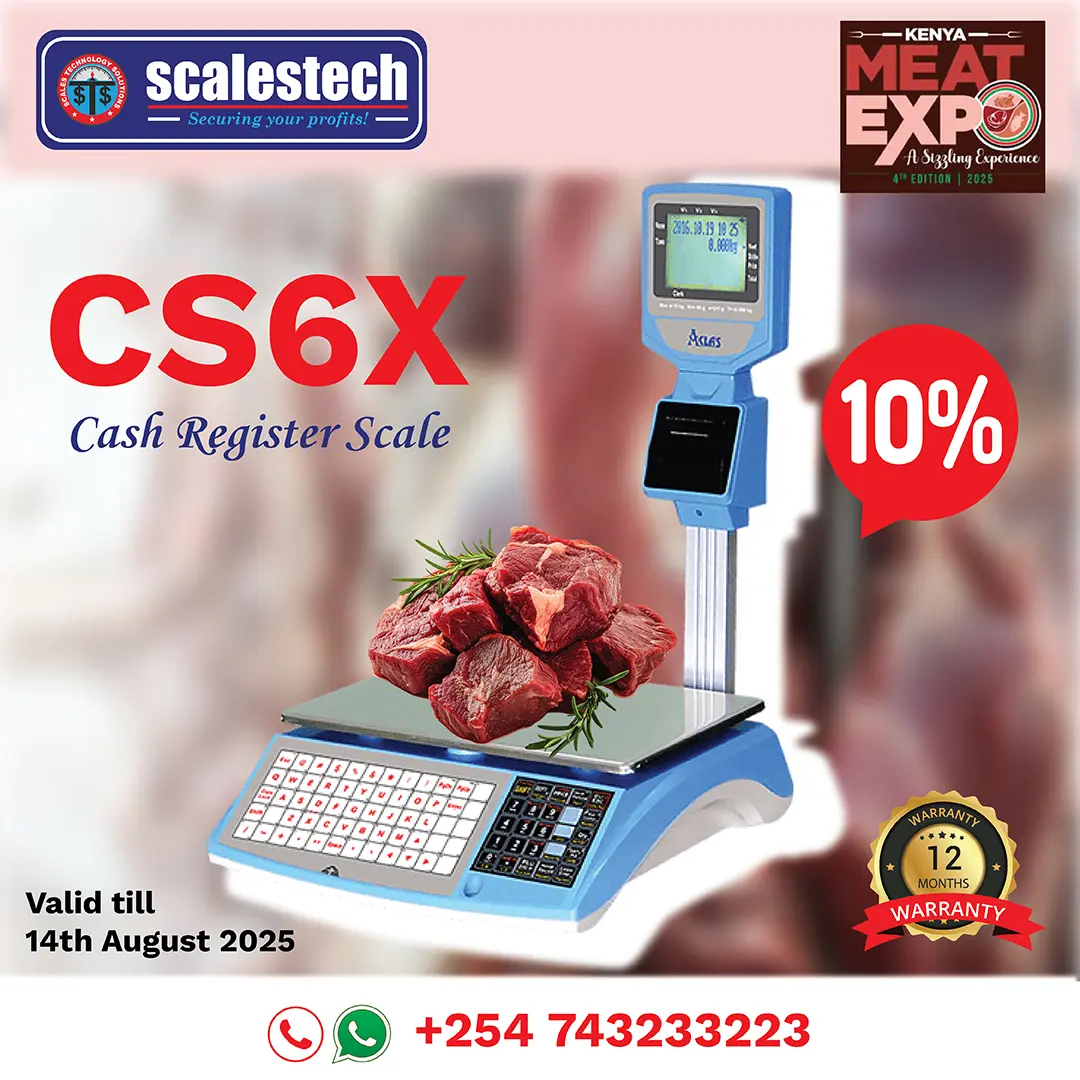
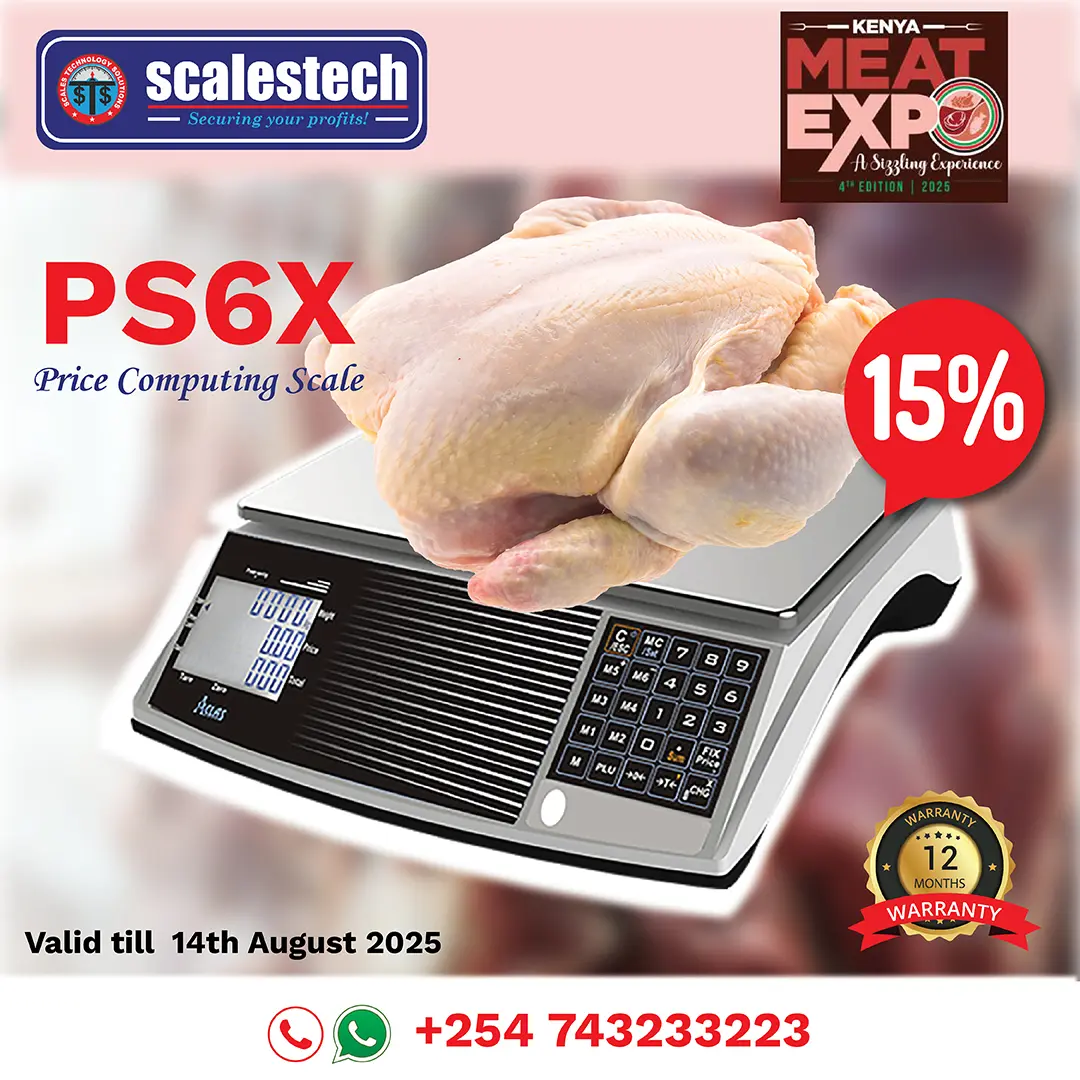
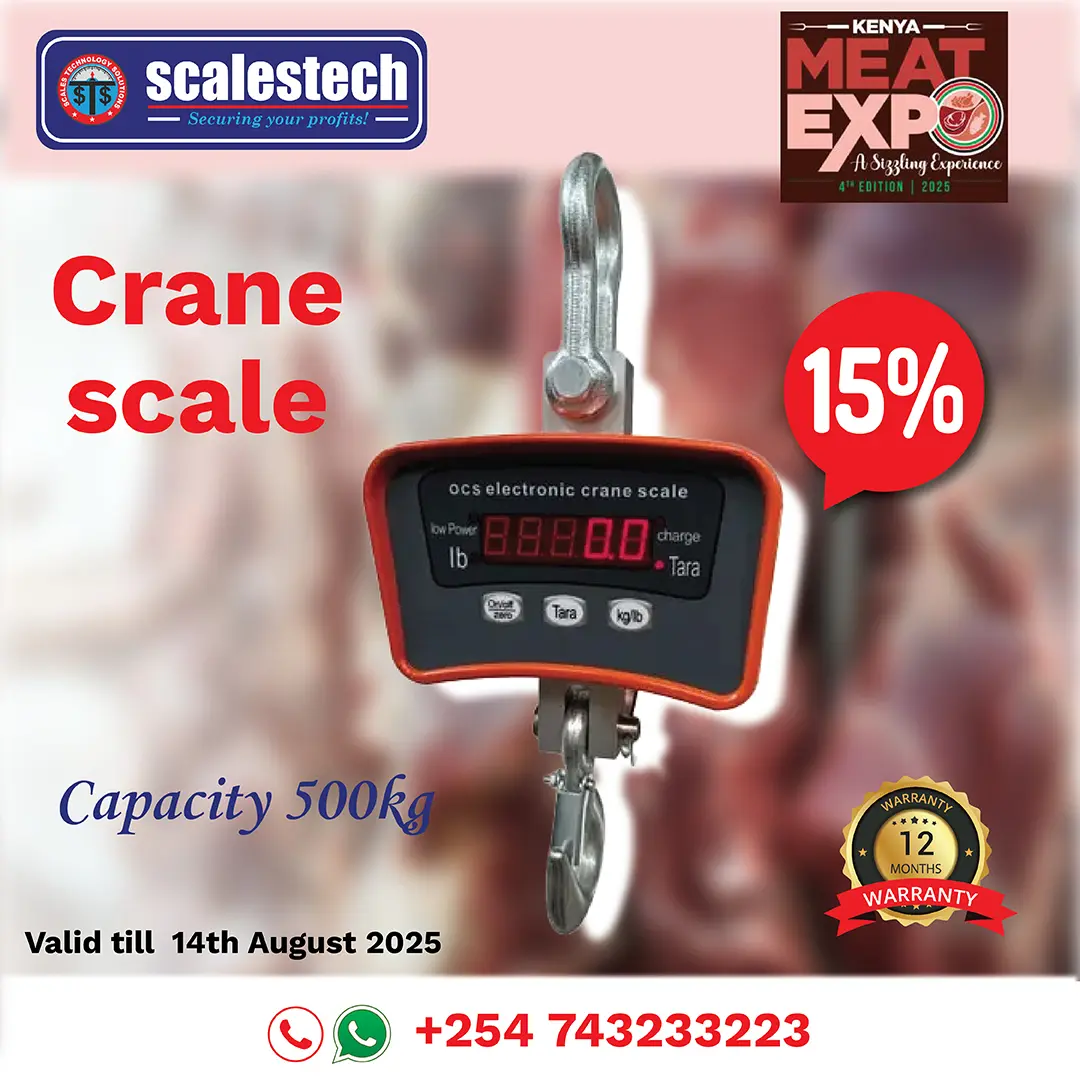
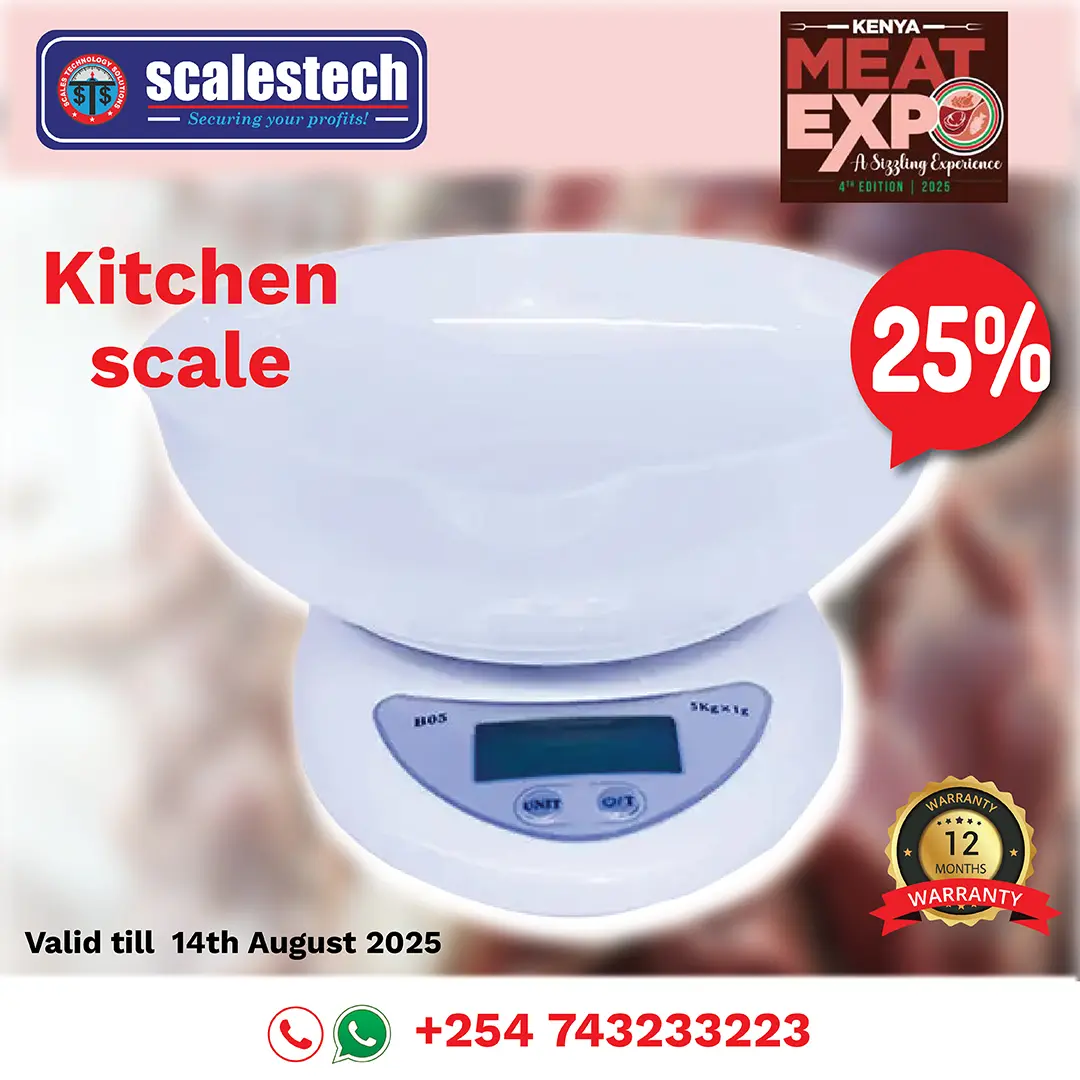
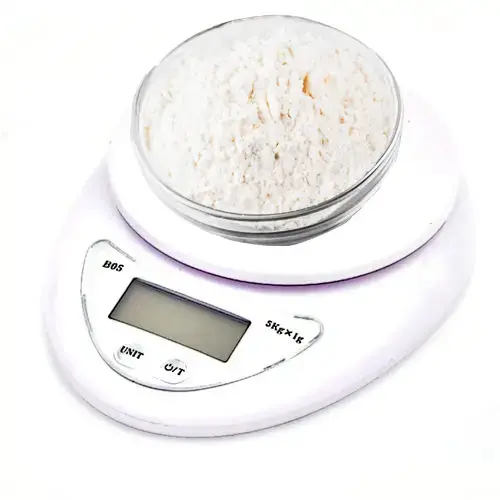
Note: the Kenya Meat Expo 2025 offers (CS6X, PS6X, OCS crane scale and Beryl kitchen scale discounts) ended on 14 August 2025. Ask us for current prices.
Which scale does a butchery need?
| Task | Recommended scale | Why |
|---|---|---|
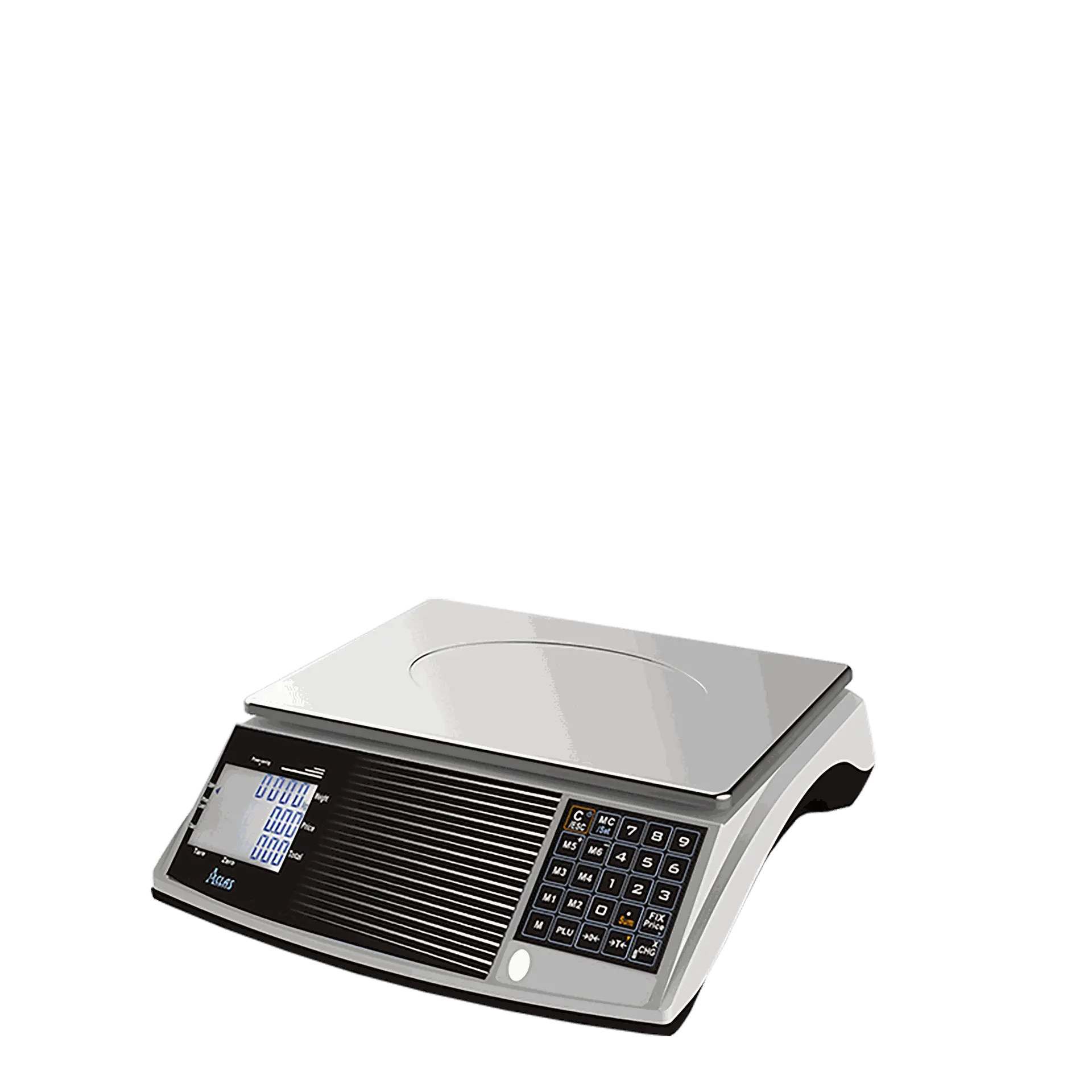
| Selling cuts over the counter | Price computing scale, e.g. ACLAS PS6X | Calculates the price instantly from weight and unit price |
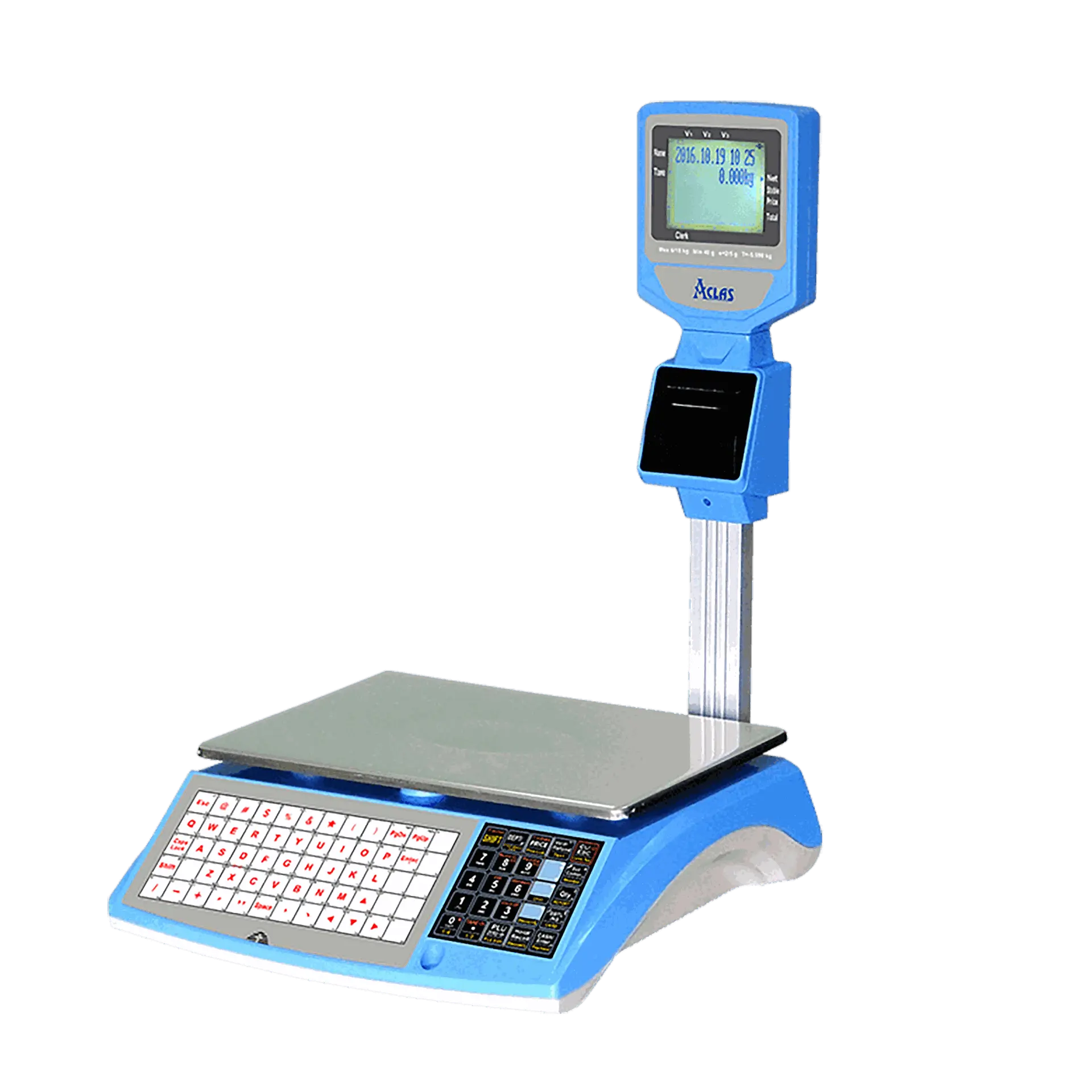
| Busy counters that need a receipt | Receipt printing scale, e.g. ACLAS CS6X | Prints a receipt with weight, price and total for each customer |
| Pre-packed meat and supermarket counters | Label printing scale | Prints barcoded labels that scan at the till |
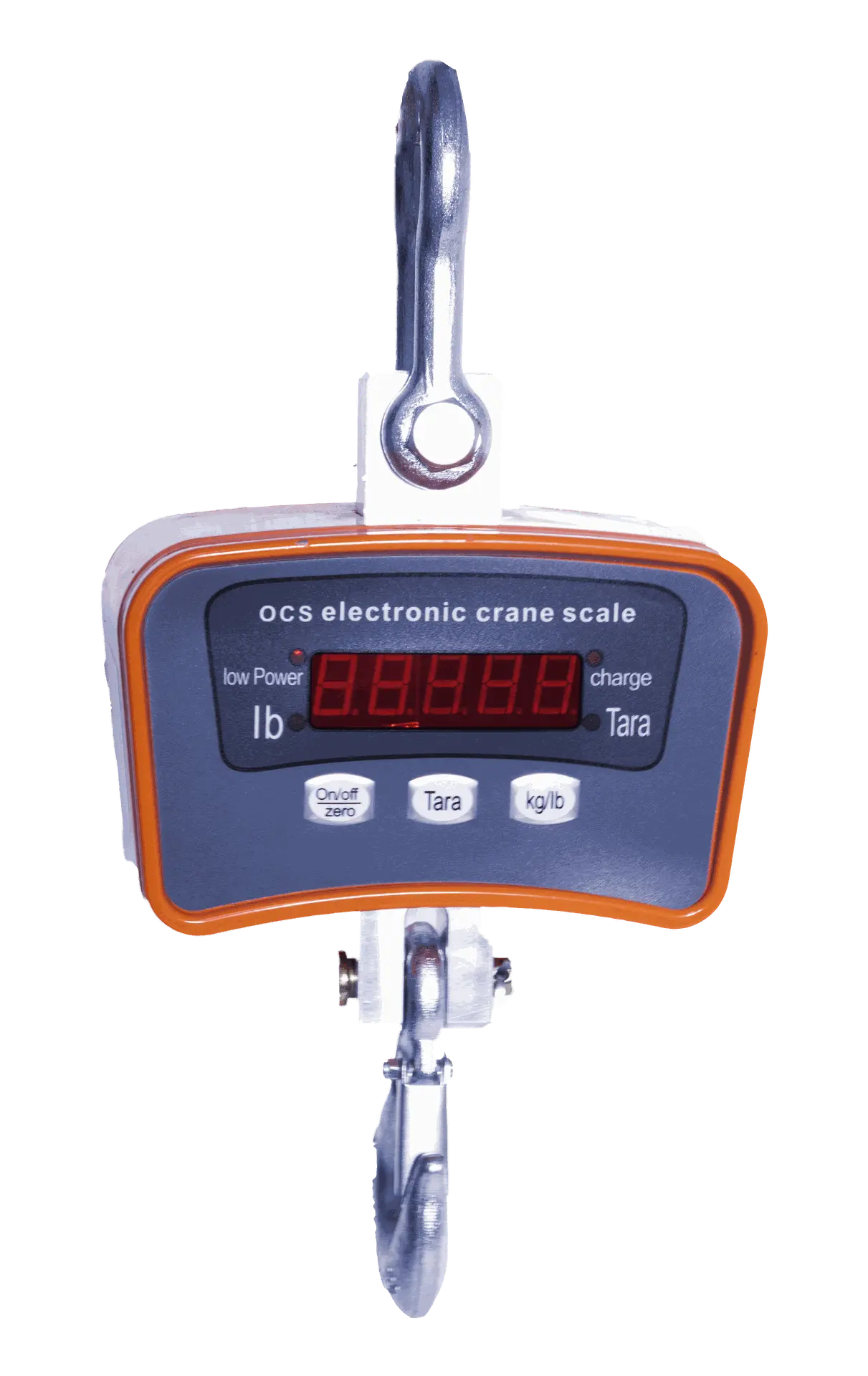
| Weighing quarters and carcasses | Hanging or crane scale, 300 kg to 1 t and above | Weighs heavy pieces straight from the hook |
| Slaughter lines | Monorail (overhead rail) scale | Weighs carcasses on the move along the rail |
| Bulk deliveries and boxed meat | Stainless steel platform scale | Hygienic and easy to wash down |
See all butchery and meat processing scales.
Features that matter in a meat business
- Hygiene: stainless steel pans and platforms that are easy to clean and resist corrosion from blood, fat and wash-down water.
- Water resistance: sealed or waterproof scales for wet areas.
- Printing and PLU memory: stored prices for each cut speed up service and reduce pricing errors.
- POS and stock integration: scales that link to your POS system track sales and stock by product.
- Trade approval: any scale used to sell meat must be verified and stamped by Weights & Measures.
Butchery weighing systems: beyond the single scale
Growing butcheries and processors often move from standalone scales to a weighing system: scales, label printers and POS on one network, with each sale recorded against the product. This shows real yields per carcass, exposes shrinkage and theft, and makes stock-taking faster. Our weighing and POS software connects these pieces.
Keeping meat scales accurate
- Clean the pan and platform after every shift with a damp cloth; avoid pouring water on non-waterproof indicators.
- Check zero before opening and test with a known weight daily.
- Do not drop meat onto the pan or hang more than the crane scale's rated capacity.
- Calibrate yearly and before stamping; see our calibration services.
For the full farm-to-retail picture, read weighing in the meat industry.
Frequently asked questions
For counter sales, a price computing scale or receipt printing scale such as the ACLAS PS6X or CS6X. Add a hanging or crane scale for quarters and carcasses.
Yes. Any scale used to sell meat by weight must be verified and stamped by the Weights & Measures Department and re-verified every year.
Receipt printing suits over-the-counter service. Label printing suits pre-packed meat and supermarkets, where barcoded labels are scanned at the till.
Choose a capacity above your heaviest piece: 300 kg for small carcasses and quarters, 500 kg to 1 tonne or more for cattle carcasses.
Setting up or upgrading a butchery? Request a quote and we will recommend the right counter, hanging and label scales.
Video: Retail store owners: stop losing money on bad scales
How to choose the right scale for your counter. Request a quote or watch more on our YouTube channel.
Related from Scalestech
See butchery scales and retail scales, or request a quote.